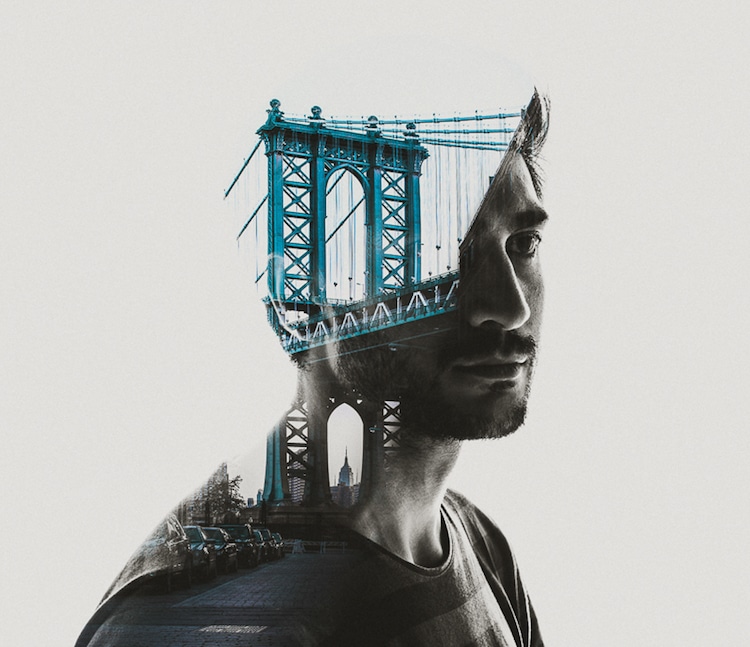
Today double exposure has become very popular, in many medians, and some people think this technique is relatively new. However, double exposure has been used since the 1860s, the image below shows some examples. In the 1860s this was a significant business boost, “they discovered how to make a portrait subject appear twice in a frame as if they had an identical twin. In each of the pictures, the person was striking a different pose.” (Barnes, 2017)
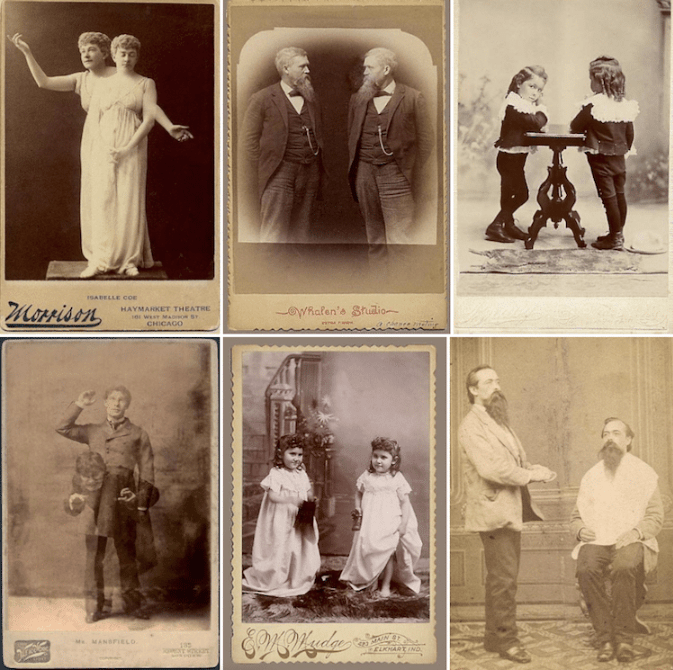
“To capture these now-vintage images, photographers would snap a picture of the subject in one position. Then, they’d have to move into another pose before the following photo was shot. Rotating lens caps and special plates (the precursor to film) were also part of the process. The result was a playful and surreal approach to early photographs.” (Barnes, 2017)
As technology improved, we can now create this effect within our own digital camera.
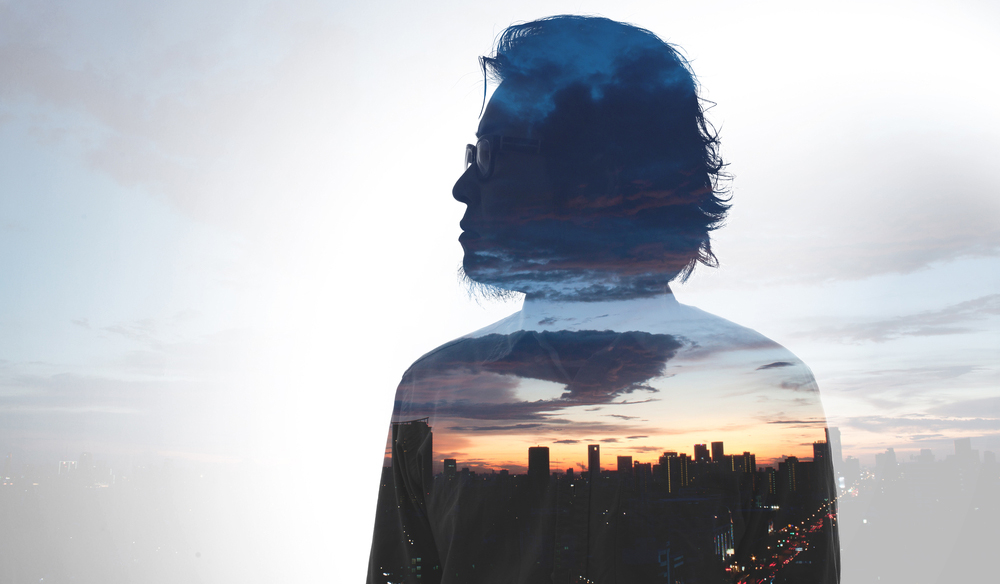
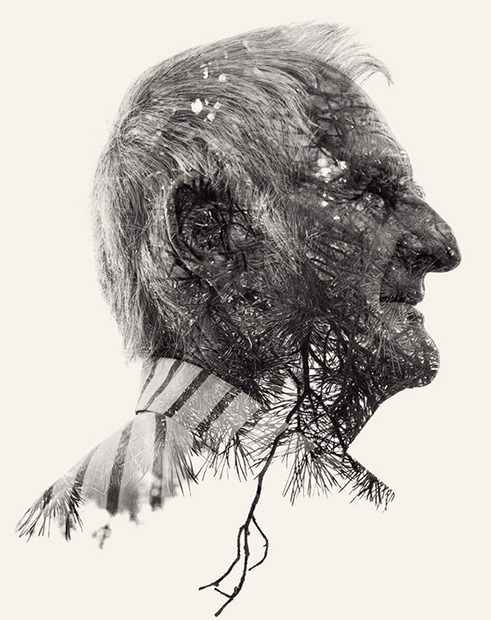
It’s interesting also to see how the dynamic has changed on how the photographer and model wants the image represents. Back then, the photos were to make these people look noble, powerful, and have elegances. However, today, it could be used to manipulated, distorted the viewers perspective.
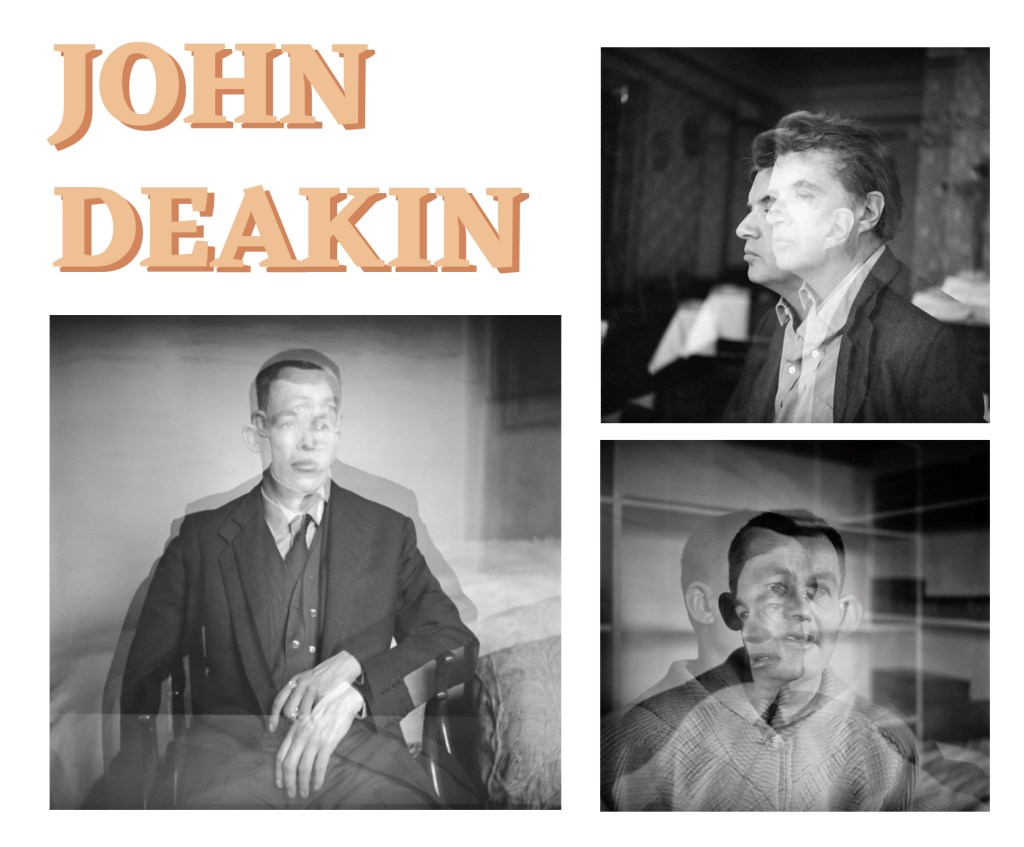
John Deakin was a British photographer. He is known for his portrait; however, he has produced some fantastic images with this technique.
The video below “explores John Deakin’s artistic development from the 1930s into the war years, contextualising his work within a broader framework of 20th century Modernism. Presenting new research from the Tate Gallery Archives that connects Deakin to British photographer Barbara Ker-Seymer, it includes the discovery of an early double exposure that could have been taken by either photographer. Paul Rousseau and James Boaden take account of the surrealist elements of the double exposures, exploring connections to Francis Bacon’s Man in Blue series; and Jonathan Law presents Deakin’s double exposure portraits alongside a rich seam of others by artists including Degas, Duchamp and Picasso, positioning the time-based multiple planes within these photographs alongside the generation of cubism.” (Paul Mellon Centre, 2016)
This video is interesting as it includes mostly the works of John Deakin, however, mention other artists that have used the technique of multiple exposures. It’s fascinating to see other artist take on this technique.
In the video, it mention that to produce the images above, Deakin would have had to really think about the positioning, lighting and allowing the exposure to be a balance. Even of the multiple exposure effect, the images themselves are really lovely and natural-looking. If I did this in the same style of Deakin, I would think and plan about the key things above. From observing the images, it looks like they were all photograph by the window, which produced the beautiful soft lighting.
While Deakin was photographing Pablo Picasso, Picasso generated his own double exposure, which later he used them as the bases of his work. Within the video one of the men says “different angle but all on the same viewpoint” (Paul Mellon Centre, 2016), which if you look at the images they really do, they’re all different but somehow connect together. Later he says “the double exposure allows you to bring back that element of time, and to represent things from different angles. And to represent different states within a single image.” (Paul Mellon Centre, 2016)
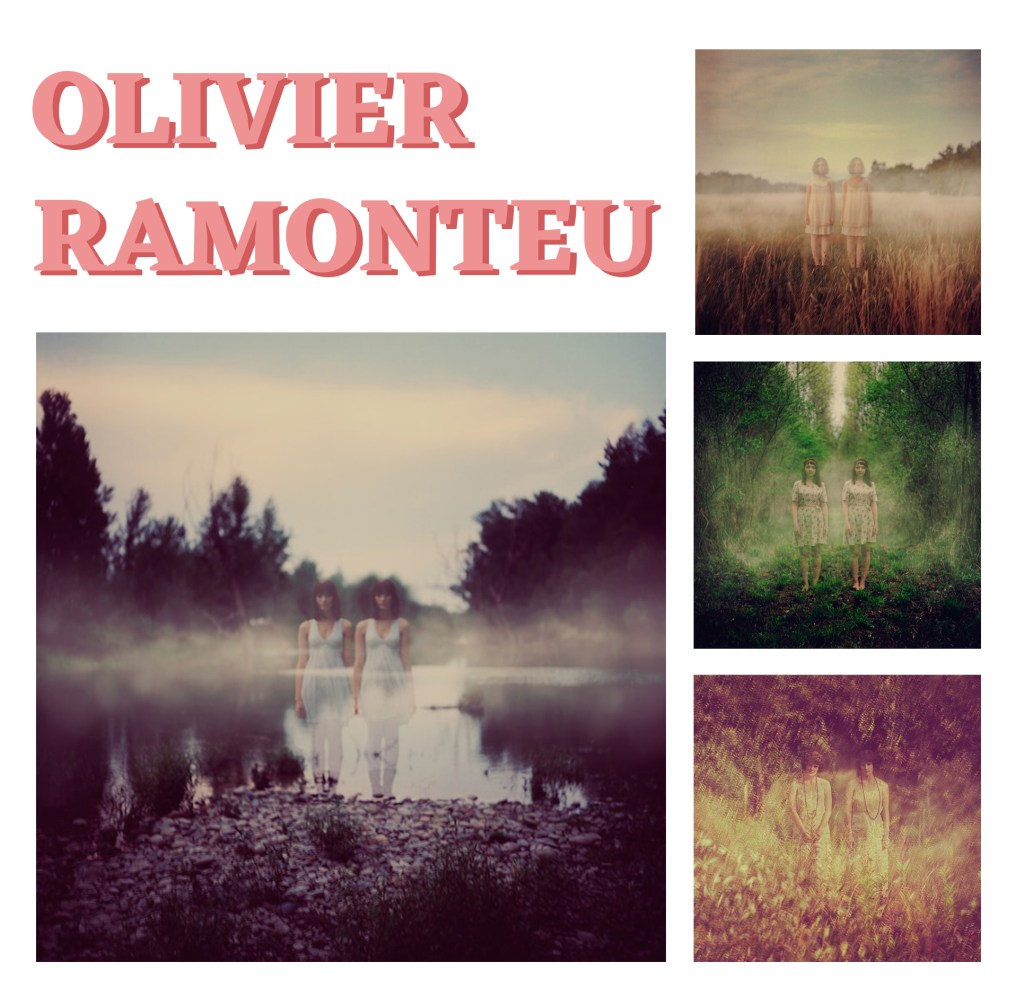
Olivier Ramonteu, a french photographer, uses both analogue and digital camera methods in his work. The images above are from his series ‘Alter Ego’, which features ghostly images of twins—or so we think. “Some are identical twins, while others are the same person shot in multiple exposures.” (Barnes, 2017)
“The main idea of the project was to make people doubt what they see,” Ramonteu said. “I clearly decided to not reveal if the people you see are twins. I can only say that for this project, I did a lot of experimentations with and without twins.” (Rosenberg, 2014)
“I tried to create beautiful and disturbing scenes,” Ramonteu noted as a consistent theme with his other work. “I love to introduce a part of strangeness in my scenes, something that is not really obvious but definitely present. That is why the people I represent here seem at once so fascinating and so disturbing.” (Rosenberg, 2014)
This is sort of what I see; however, Ramonteu has manipulated the viewer’s eye in thinking is this real or not, yet making it beautiful. The way how he has placed the model within a location that is empty but somehow fits with the concept. For my project, if I photograph people, I would have to think of an area that makes sense for me, the concept of the project, and what will please the viewer’s eyes.
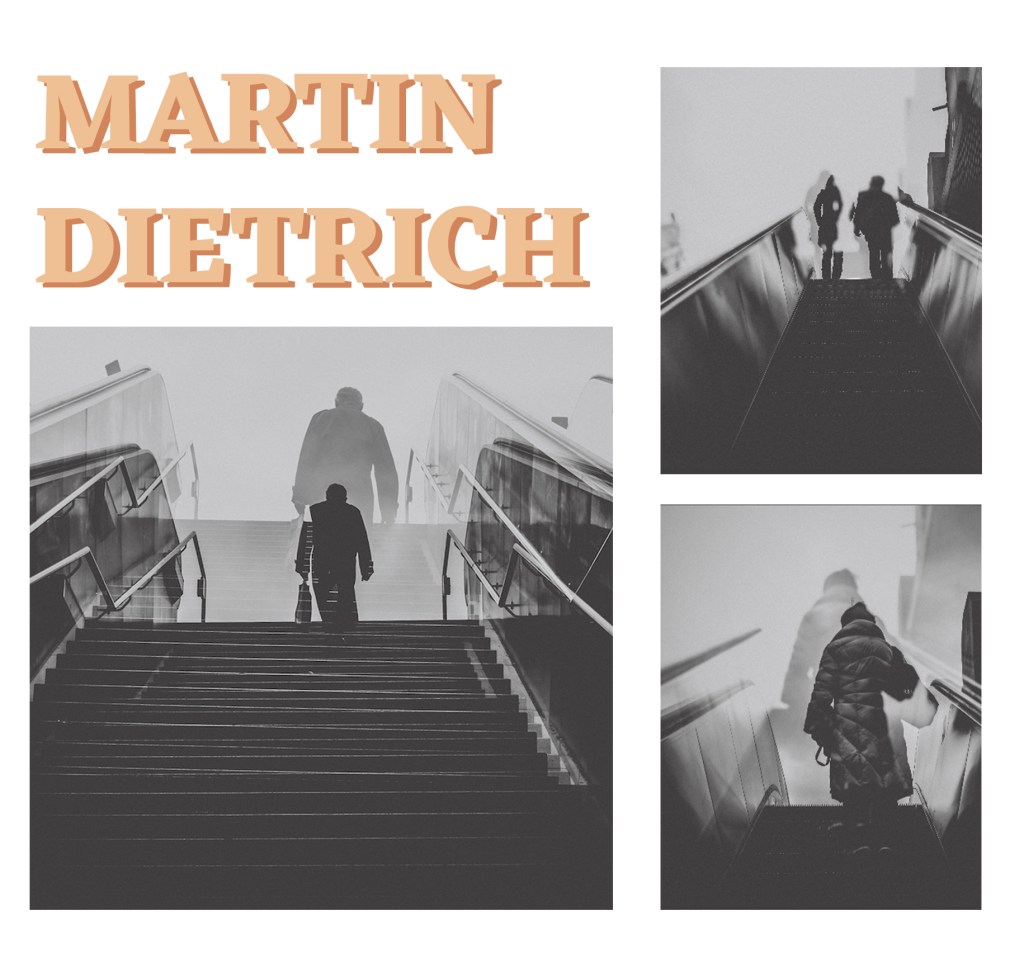
Martin Dietrich is a photographer from Germany, and his “work is mostly of a certain abstract, minimalistic and geometrical nature, including strong leading lines and shapes. To a large part, my work incorporates urban themes such as architecture and street photography. Nevertheless, you’ll also find some other things I feel like at the moment.” (Martin Dietrich Photography, n.d.).
The images above are from ‘The ghosts that carried us away’ series. The link is below for the full series. Dietrich made this series in January 2014, done in-camera with Fujifilm X – Pro 1.
https://www.behance.net/gallery/14029499/The-ghosts-that-carried-us-away
His approach to a ‘street style’ multiple exposures is visually exciting. From the viewpoint he took this at, the position of the second exposure, having the series in black/white, to the leading line help create a mysterious but fascinating series. As you cannot see the people faces in the images, it makes you feel like it could be anyone, or you could be a part of it. Also, the use of the stairs/escalator going upwards makes you think where are they going. Almost heaven-like due to the white canvas background at the top.
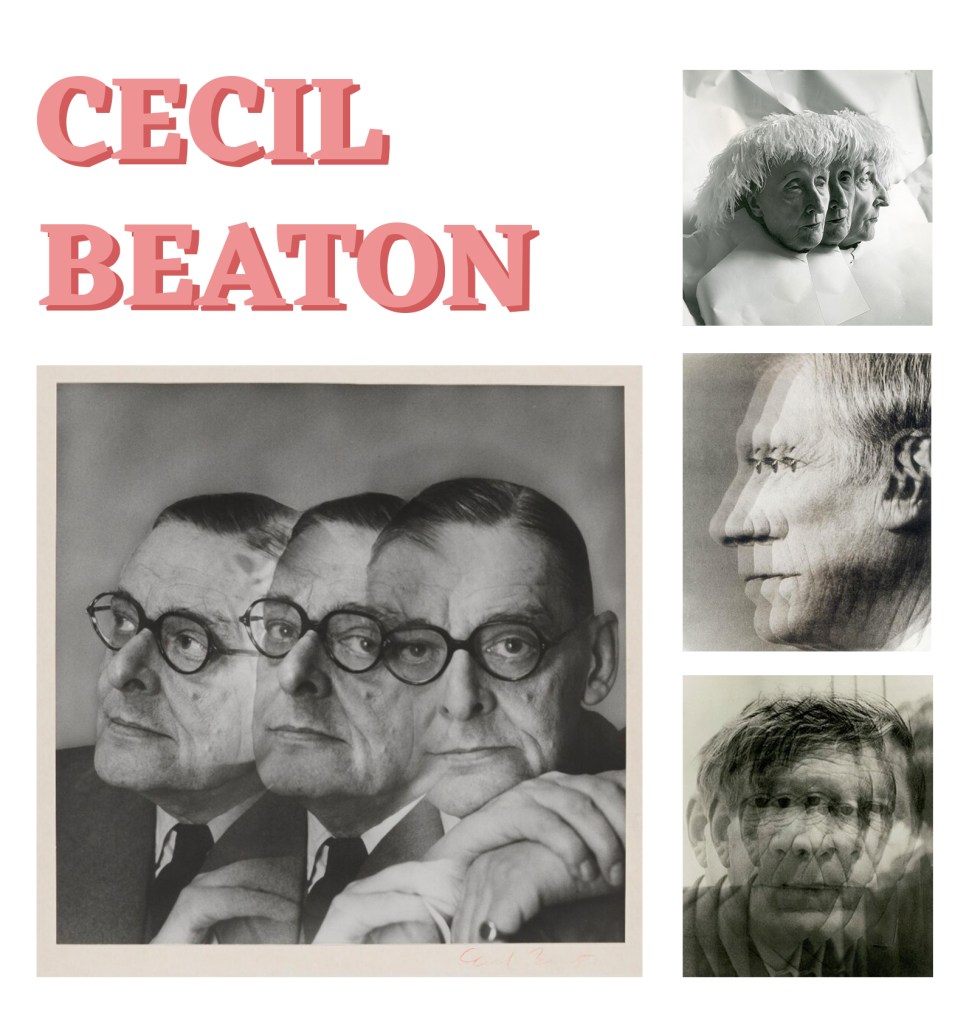
“Cecil Beaton was a British photographer and designer best known for his elegant photographs of high society. Working within a cinematic approach, his black-and-white images are characterised by their staged poses and imaginative sets.” (Artnet.com, n.d.)
“Be daring, be different, be impractical,” he once declared. “Be anything that will assert integrity of purpose and imaginative vision against the play-it-safers, the creatures of the commonplace, the slaves of the ordinary.” (Artnet.com, n.d.)
Beaton work above has a similar approach as John Deakin, I find Beatons work more artistic and surreal. While researching Beaton and finding images that were related to my project, I came upon the book below.
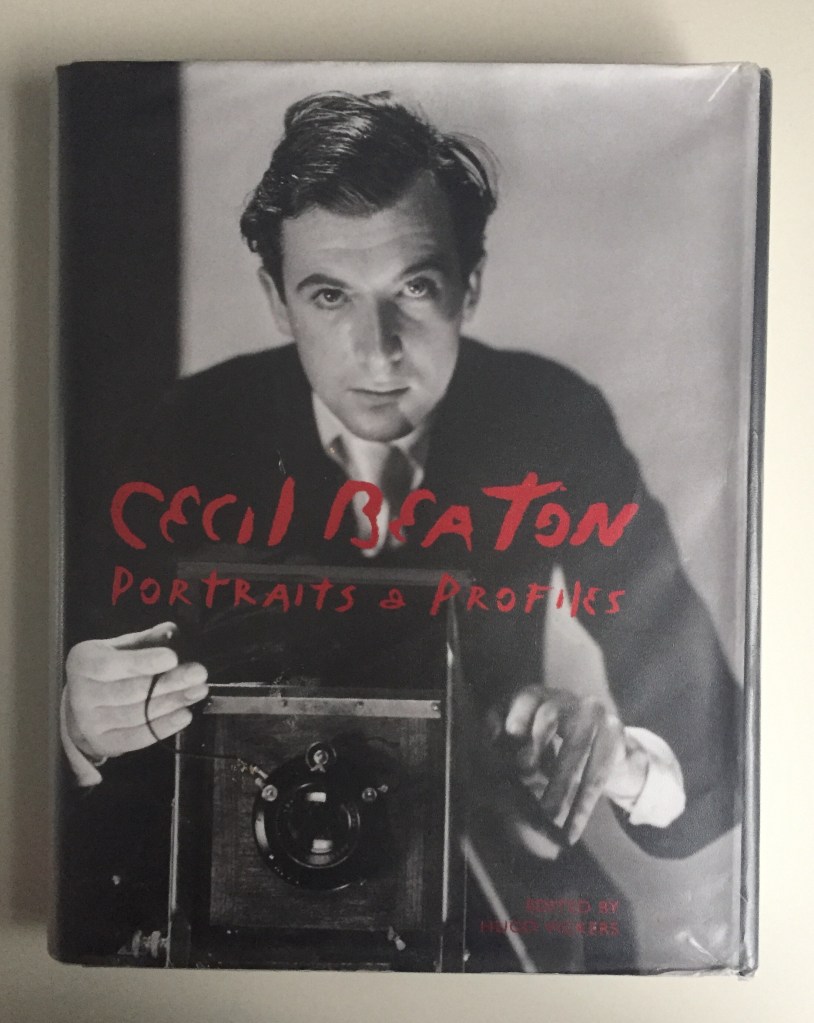
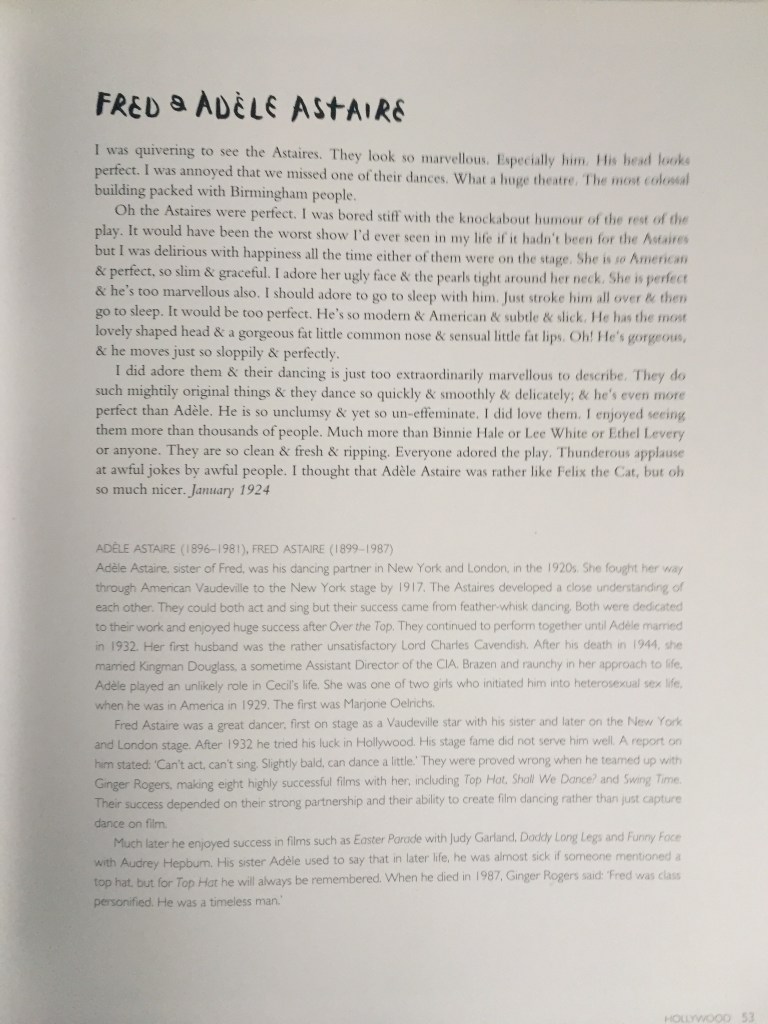
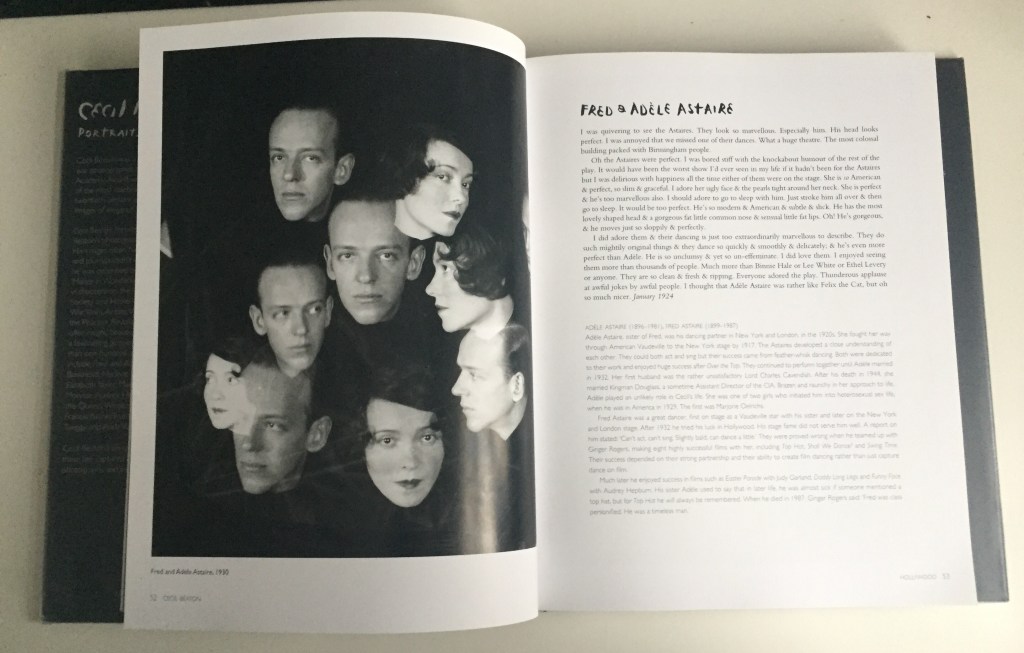
(Beaton and Vickers, 2014)
The image ‘Fred & Adele Astaire, 1930’ is another image of Beaton multiple exposure work. In the text, Beaton always mentions how “They look so marvellous”, how “His head looks perfect” and how Adele was “so slim & graceful”, so perhaps that why he produced a multiply exposure image, so you can see how ‘perfect’ they are from all angles. Because Beaton has used the word ‘perfect’ seven times throughout the paragraph, and other terms as well. Maybe that why Beaton mainly photographed celebrities because of their looks and status. Or how he was interested in their own identity.
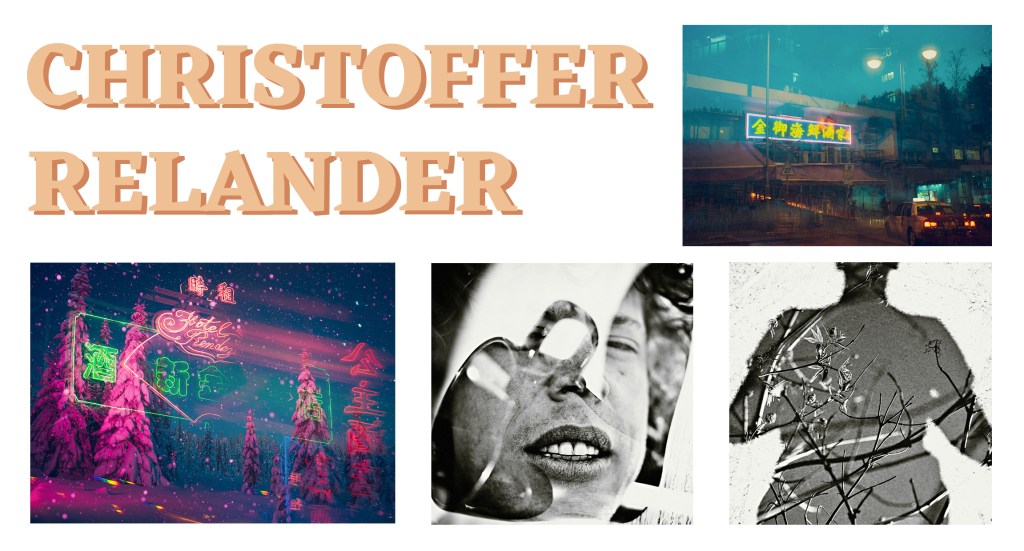
“Christoffer Relander was born in Finland December 1986 and grew up in the countryside of Ekenäs. Relander’s interest in art started at an early age, but it was not until he served the Finnish Marines between 2008-2009 that he found his passion with photography.” (Christoffer Relander, n.d.)
Even though his photography is not the style I want to take mine, it is really fascinating. When you type multiple/double exposures into the internet, you always get the stereotypical photography artwork. However, Relander has used this technique and interpreted it into his own style and made something that I’ve never seen before. This quote by Relander is compelling and what I want to capture and try to achieve in this project.
“Reality can be beautiful, but the surreal often absorbs me. Photography to me is a way to express and stimulate my imagination. Nature is simply the world. With alternative and experimental camera techniques I am able to create artworks that otherwise only would be possible through painting or digital manipulation in an external software.” – Christoffer Relander
The neon colour images above are really trendy, modern and exciting. Using a juxtaposition, by overlaying two completely different areas, one being rural and untouched, and the other being urban and man-made is impressive. Also, the colours produced from the neon signs is a great idea, you can tell that Relander really thought about the locations and angles.
REFERENCES
Barnes, S. (2017). How Double Exposure Photographers Fuse Two Separate Worlds into One Dreamlike Scene. [online] My Modern Met. Available at: https://mymodernmet.com/double-exposure-photography/ [Accessed 19 Dec. 2019].
Behance.net. (2014). Behance. [online] Available at: https://www.behance.net/gallery/14029499/The-ghosts-that-carried-us-away [Accessed 19 Dec. 2019].
Beaton, C. and Vickers, H. (2014). Cecil Beaton Portraits & Profiles. London: Frances Lincoln Limited, pp.52, 53.
Christoffer Relander. (n.d.). Christoffer Relander. [online] Available at: https://www.christofferrelander.com/ [Accessed 19 Dec. 2019].
Martin Dietrich Photography. (n.d.). About Me — Martin Dietrich Photography. [online] Available at: https://www.martindietrichphotography.de/about-me [Accessed 19 Dec. 2019].
Paul Mellon Centre (2016). John Deakin: Double Exposures and Modernism. Available at: https://www.youtube.com/watch?v=UnFab9Z5sig [Accessed 20 Dec. 2019].
Rosenberg, D. (2014). Are These Models Twins? A Photographic Exploration of Doppelgangers.. [online] Slate Magazine. Available at: https://slate.com/culture/2014/09/olivier-ramonteu-alter-ego-is-an-intentionally-confusing-and-eerie-look-at-doppelgangers-photos.html [Accessed 19 Dec. 2019].
 SARAHLOCKYERUCA