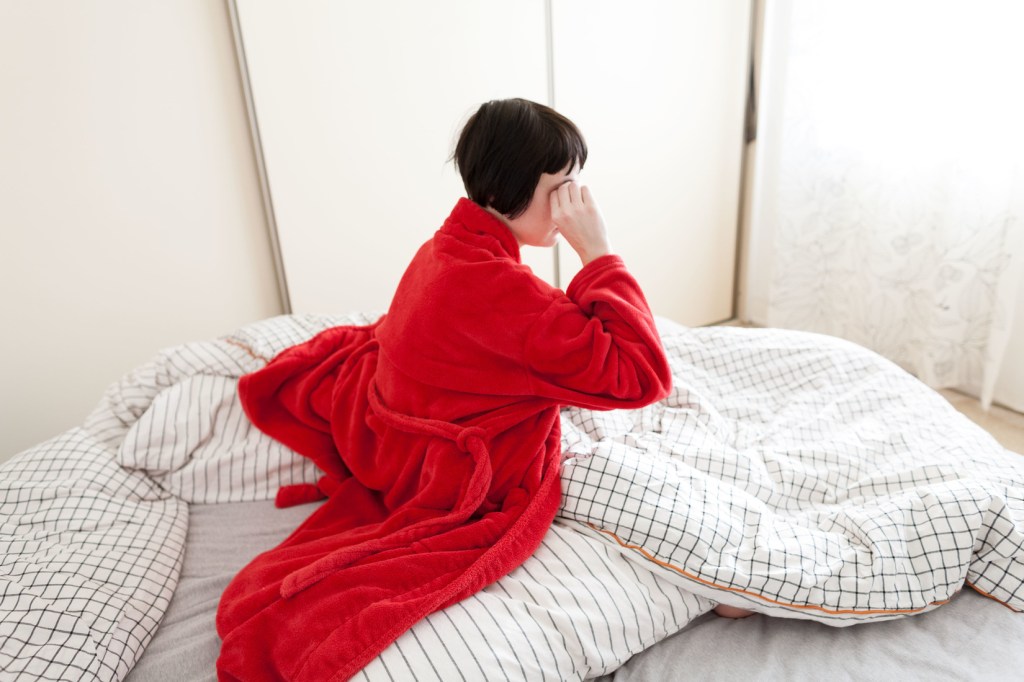
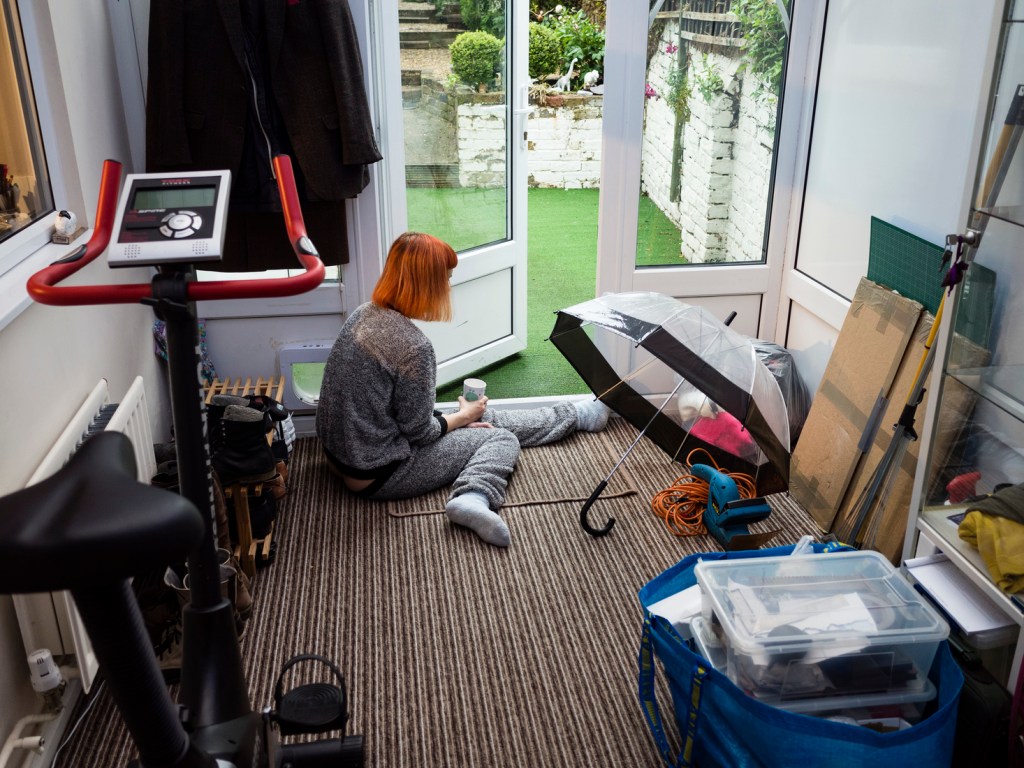
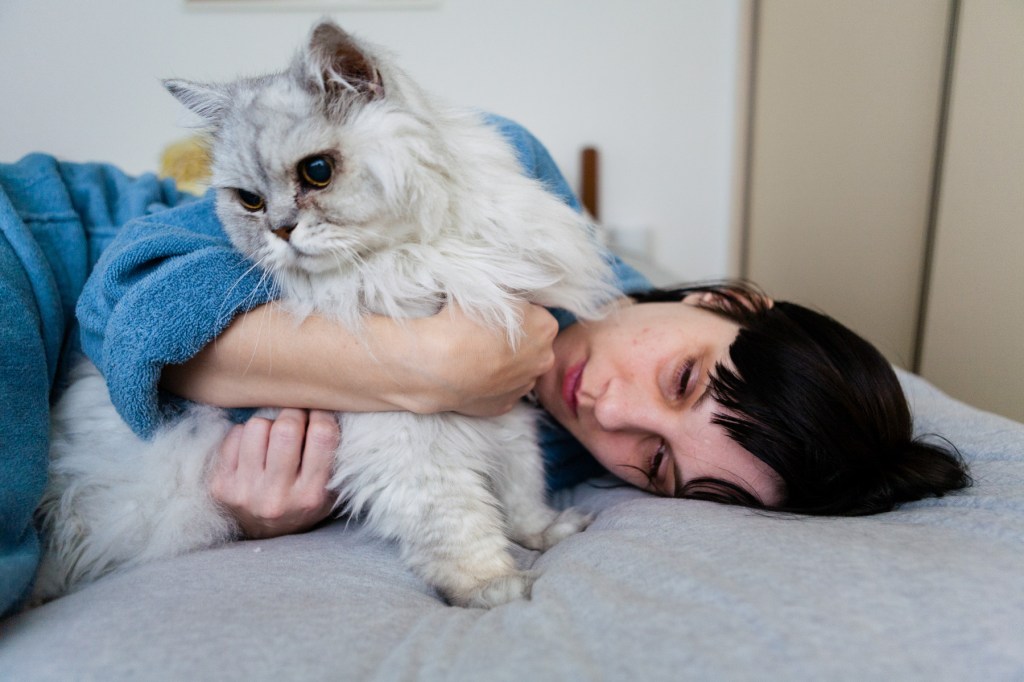
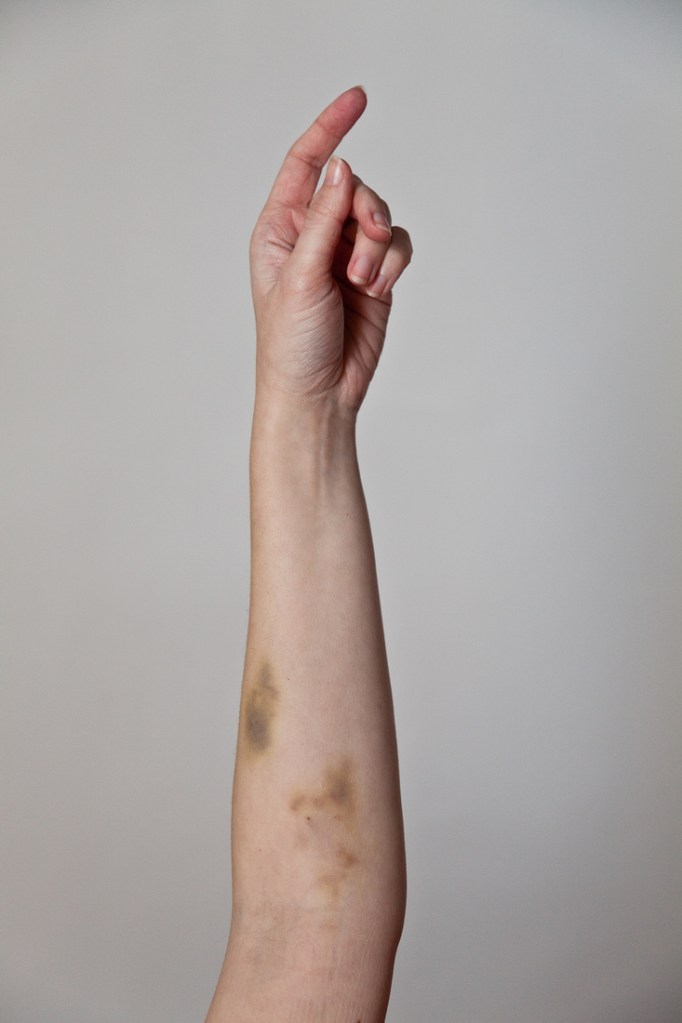
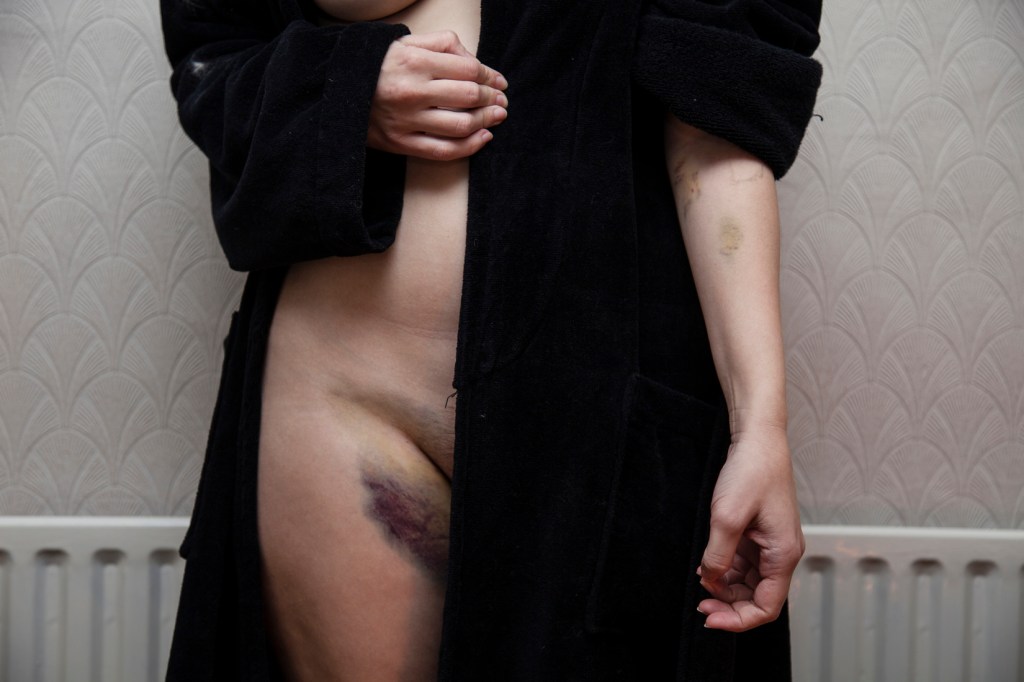
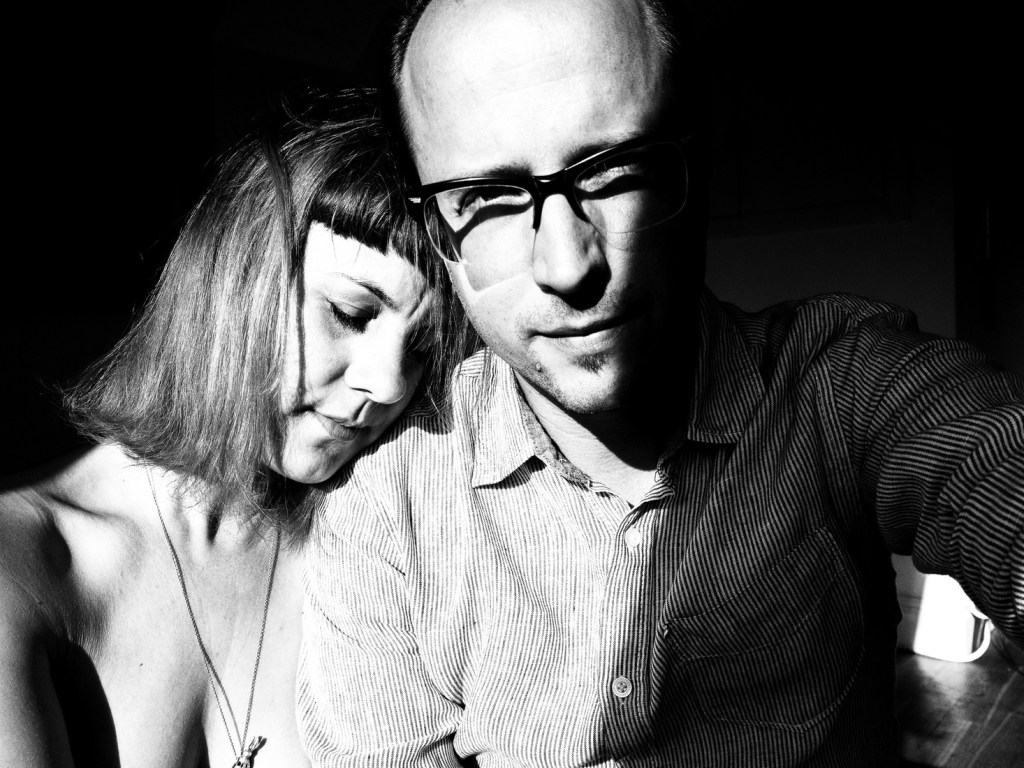
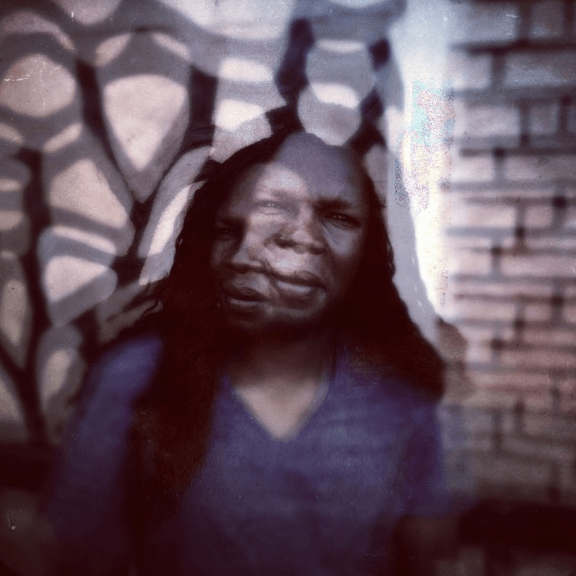
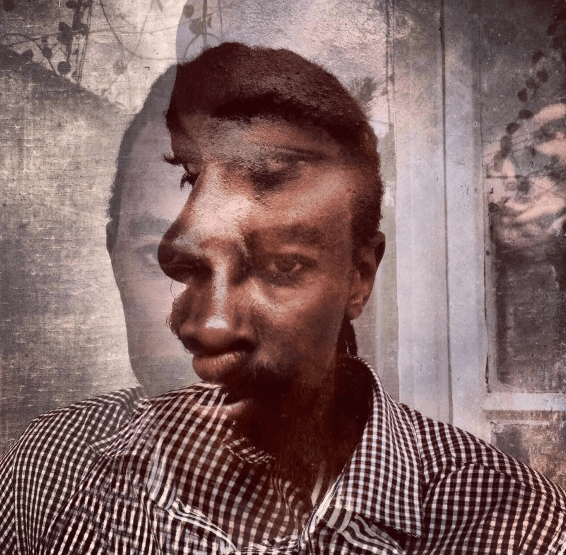
Rikard Osterlund came to our University and gave us a talk about his works, techniques he has used, and experiences. I had the pleasure of having a 1 to 1 discussion with him about my ideas for the identity unit. His work below is from Osterlund series ‘Look, I’m wearing all the colours’.
“This book is an intimate story of my journey as a husband trying to understand my wife’s illness. It was made using photographs taken over a 13 year period. Shown here is a small sample from the book. I started photographing Zara when we first met. Images of nights out, eating and kissing were soon joined by images of flare ups and hospital visits. She has fibromyalgia and hypermobility – conditions causing constant pain and which lead to life often feeling like it lacks cohesion and order. They join us as silent partners in our relationship with each other, and our wider world.” (Rikard Österlund, n.d.) Obviously, I can’t understand what his wife goes through, but I can understand the part of people not understanding and the endless hospital appointments, as I have other medical problems.
TALKING WITH RIKARD OSTERLUND
In the afternoon of that day, I had a 1 to 1 talk with Osterlund about my identity work. Overall I found this very useful and gave me some pointer in ways I could possibly produce and display my work.
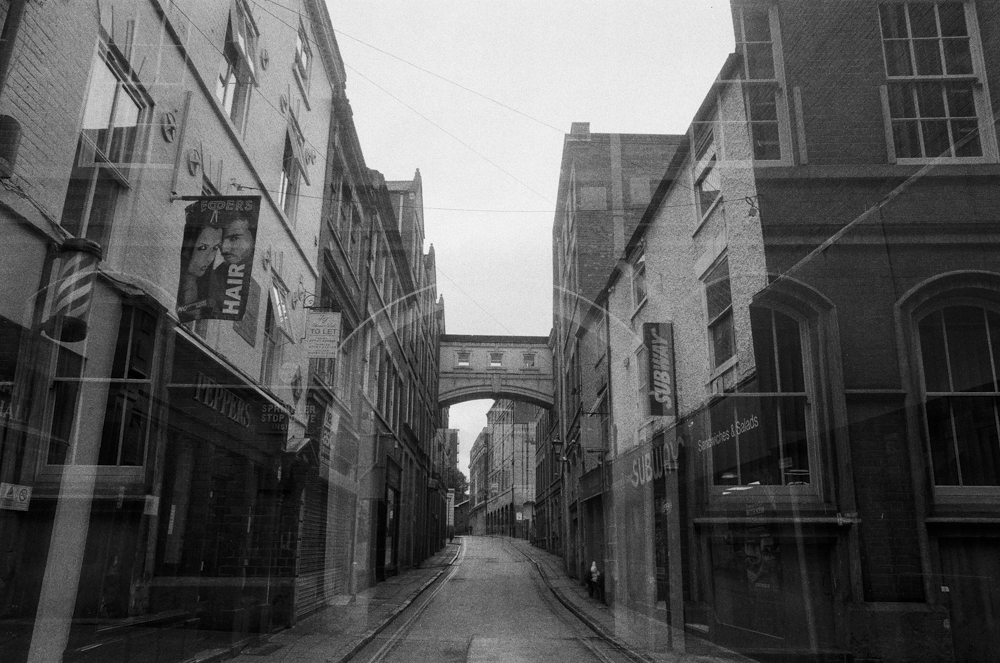
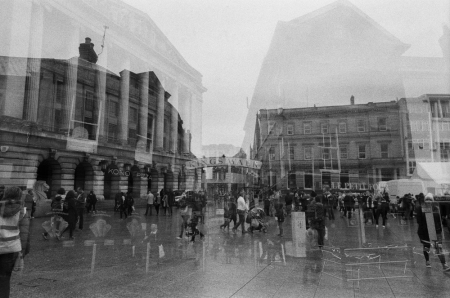
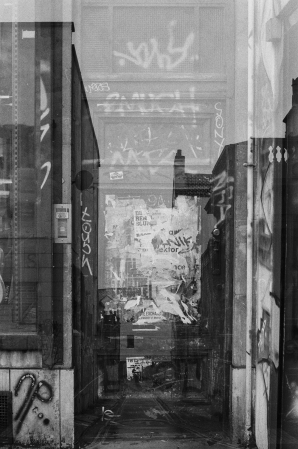
At first, I told him my idea, which consisted of explaining my eye condition. He was really intrigued by the idea and wanted to see if I had any work to show. The only work I had to show was the practise shoot 1 location images. I told him this was experimenting and practising the technique of double exposure, and I want to photograph my family as well. Below are some of the ideas that he mentions, that has help me guide the path I want to go down.
He like the location images, so the final 4-6 images won’t all consist of portraits, a bit of both
While shooting the portraits, do close-ups shots, as most of the time thats how we see our families faces
If on the day of the shoot you see something else, photograph it
I have the concept I want to do in mind, what is to show what I see through a photograph, in double exposure. But I have struggled with what to photograph. So below, I have several different ideas, that have been developed from research, but from my own identity and experiences. I have to think about will this idea allow me to complete before the deadline, will it enable me to produce 4-6 final images.
PLACES
While thinking of ideas, I thought, why not keep it simple and stick with my own life of my identity. So places came to mind, photographing locations, that means or have importance to me. One being where I live, Ramsgate. I have lots of places that would be photographically exciting but with also fit in with the brief of identity. I feel that looking at Martin Dietrich work, he has inspired me to have this idea.
PORTRAITS
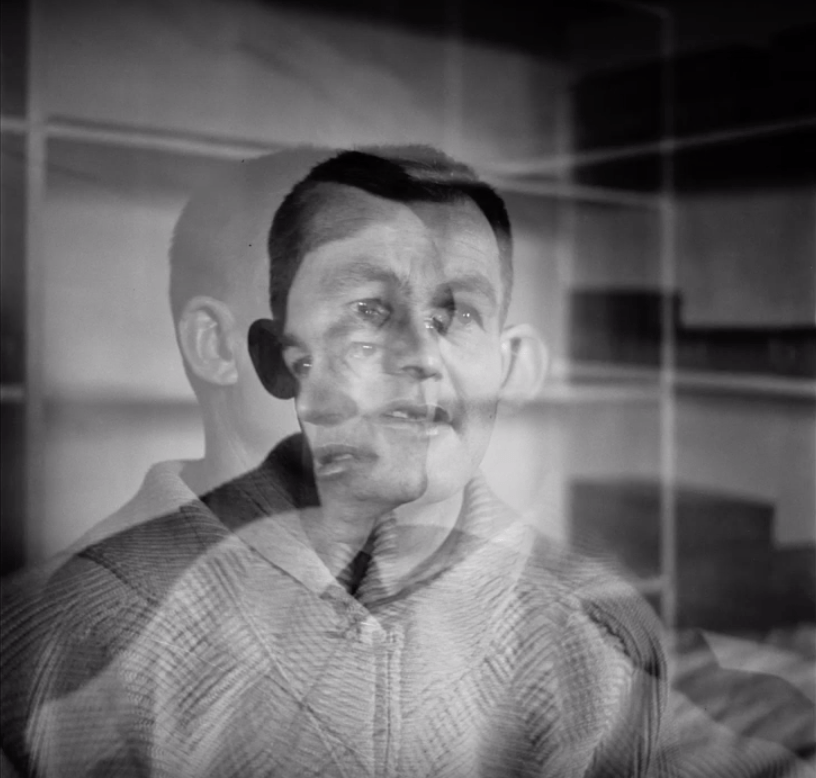
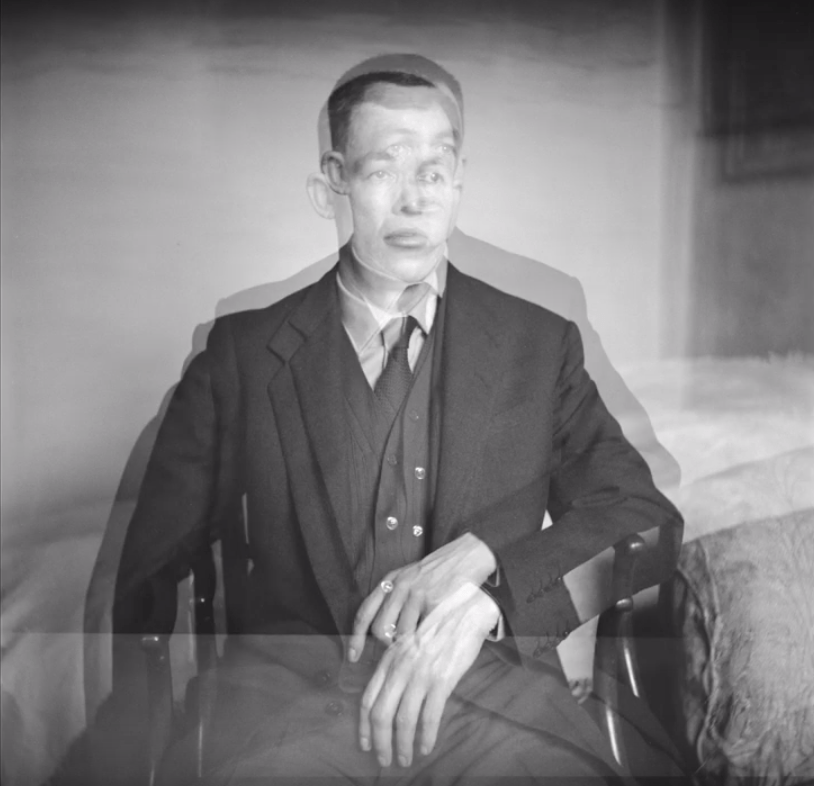
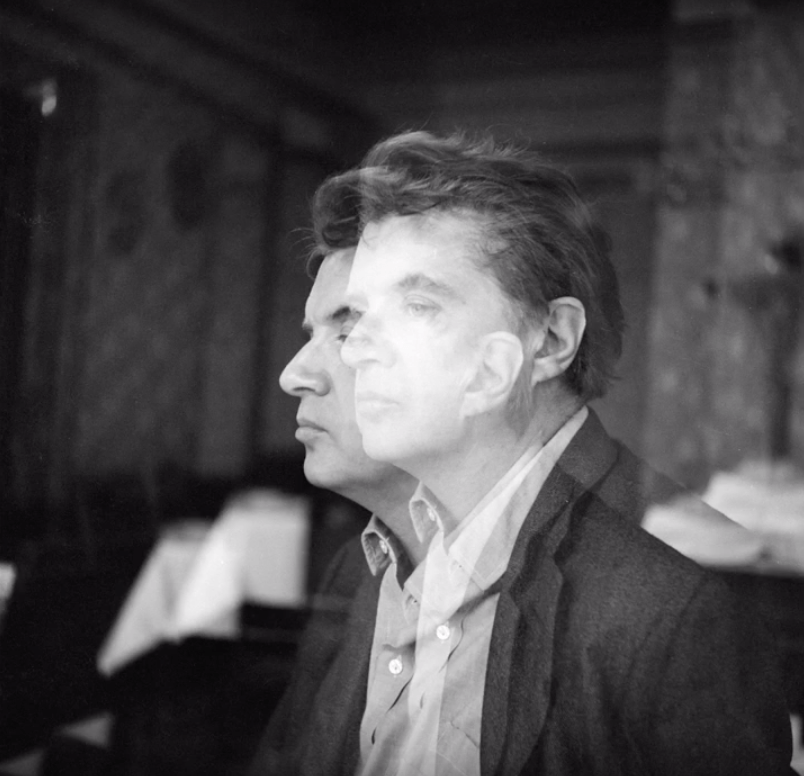
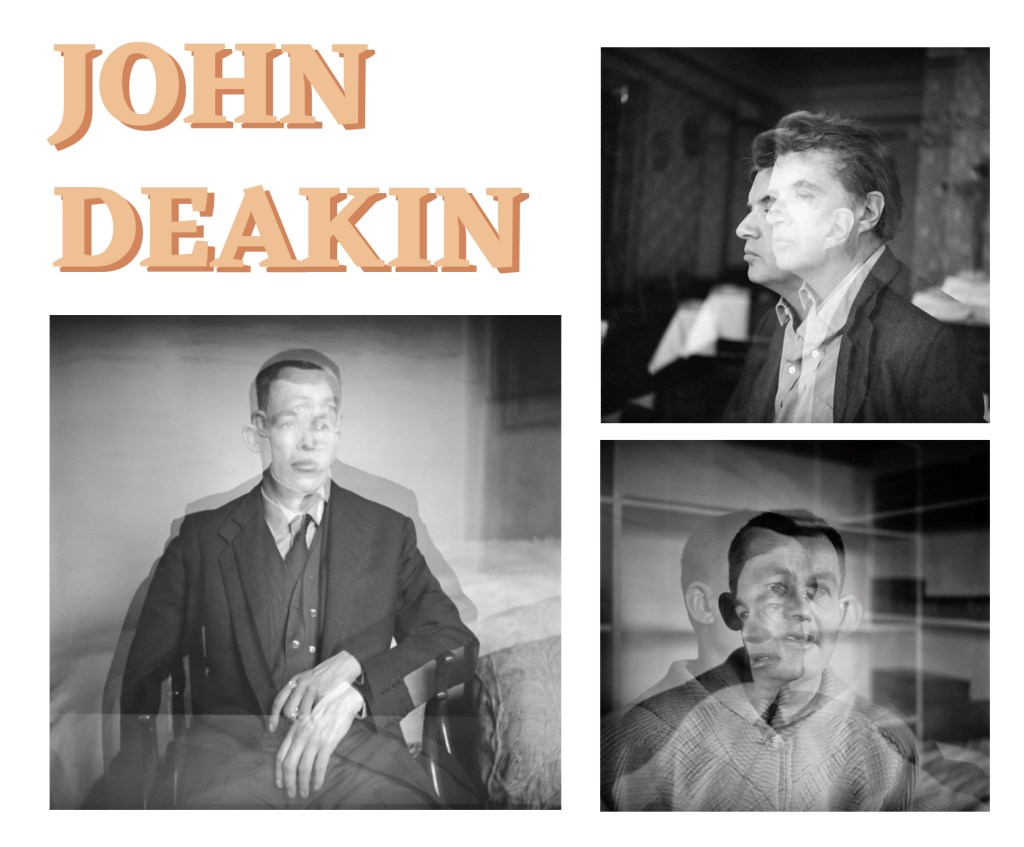
Again while researching, I found John Deakin, I love his images, from the location, lighting, positioning and emotion. As I got inspired by this, I possibly could photograph people that are close to me, or random.
The location of these images are plain, however, has texture and a bit of life to the background. So I would look at places that don’t have a busy background. The lighting is soft and clean. By my judging, I think Deakin took all of these images by a window, so using natural sunlight lighting. Also, the subjects are all looking at the light, not directly into the camera, which I like. All of the sitters look natural and comfortable as if they are not posed at all. I don’t want my subject to look posed; I would want them to look natural.
TASK THAT I STRUGGLE WITH
Many everyday tasks are typical or comfortable for some people, but for me, they have become challenging.
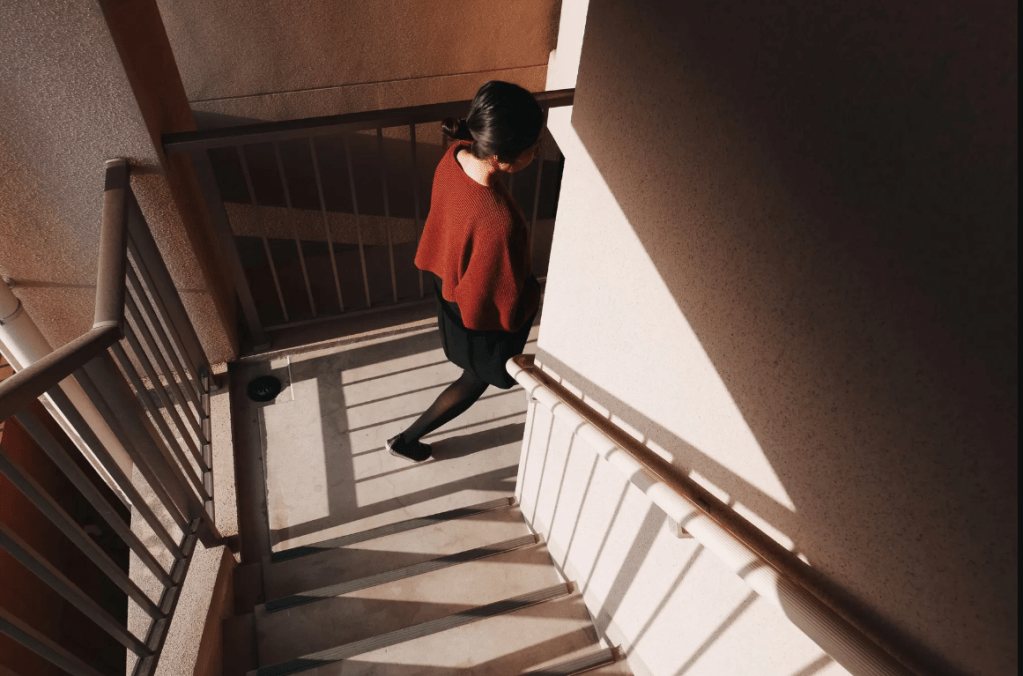
STAIRS – One of my worse nervousness is going downstairs (going upstairs is difficult but not as much as going down). For me it the angle and POV which causes double vision. So when going down the stairs, it takes me ten times longer than everyone else, either going slow or going down one stair at a time. Another struggle is when places have stairs that blend easily together, in the picture above, you can tell when the new step is, because of the end colour. But some places they don’t have that, and that’s when it makes it hard. I’m not going to lie, I have fallen down the stairs way too many times, but that’s why I take my time. Because I now have that fear of falling. I also admire the people who can run down the stairs really fast and not look where they are going in movies, even missing steps.
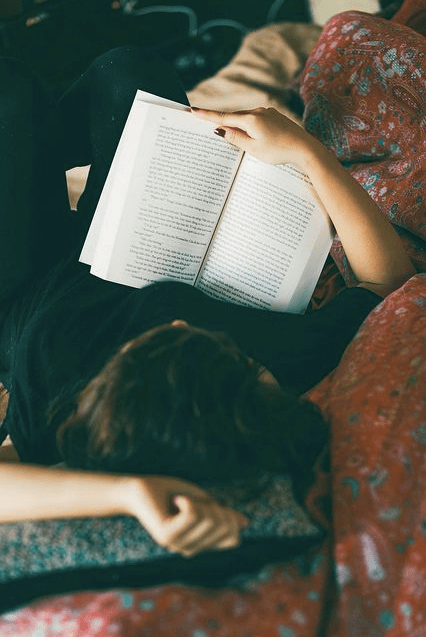
READING – Reading has always been difficult for me, not that I cannot read, but having the patience to sit down and read. I’ve never liked reading, and this is because of my eyes. I can read a small sentence over and over, but the information won’t stay in my mind. Another thing is that after reading a page, it makes my eyes extremely strained and tried, even the words in the book becomes blurred. Which most likely develops into a migraine.
FAMILY MEMBERS
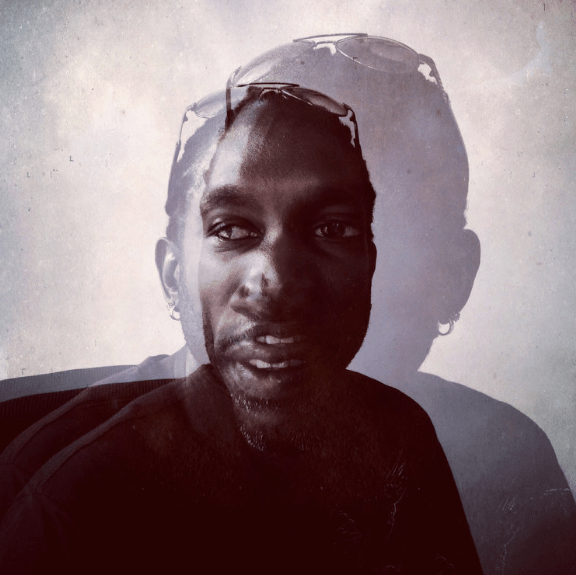
Even though this is similar to the portrait idea, maybe using my family members would have a better connection to the theme and concept of this project. As you can see above, these images were taken with no real models, just ordinary people. I could photography them somewhere around my home or other locations that relate to me and also them. Overall this idea would work because I mostly see these people every day or regularly. And have always been a part of my life. The struggle is to persuade them to be the subject; i know some people would be up to it, however others I’m not sure. And also I have to think about having enough people for the final 4-6 photo deadline. I would ask around and see who would be up for it, and see if it fits in with the deadline submission.
“A double exposure is a combination of two images into one where one image is overlaid onto another at less than full opacity. This is done with artistic intent (unless you’re shooting film and forgot to wind it between shots, but still you might get a serendipitously happy accident.) This can be done in-camera or in post processing. In film photography, double exposures are made by exposing the same portion of film twice, resulting in an the second image being superimposed on the first. In digital photography, double exposures can be made in-camera in some cases when it’s available as a creative effect in a body, in photoshop, or in apps designed specifically to make digital double exposures.” (SLR Lounge, n.d.)
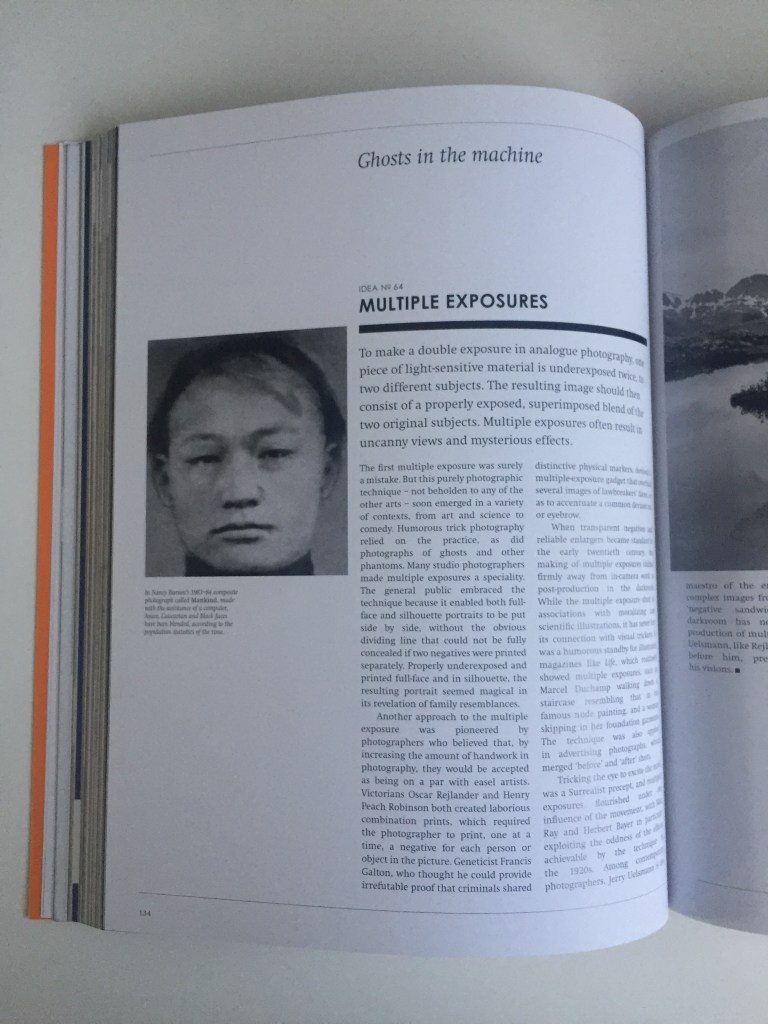
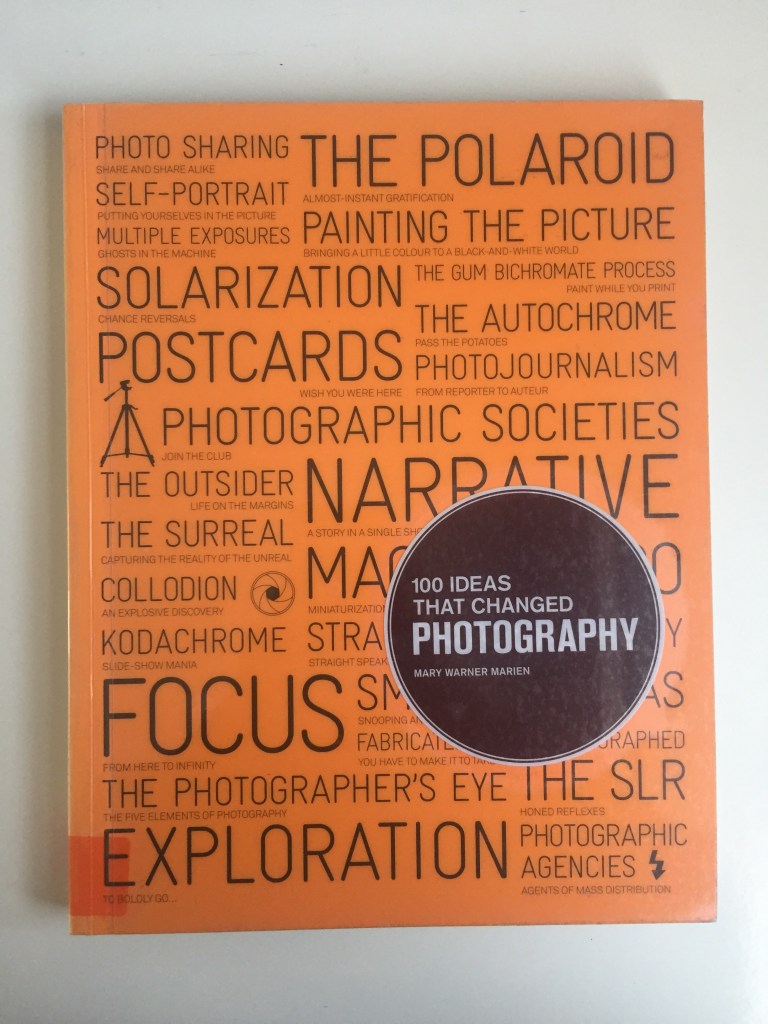
In the book above it talks about the authors experience and techniques she used in order to produce analogue multiple exposures and talking about how other people approach this method.
OTHER WAYS THAT CAN DISTORT OTHER PEOPLES PERSPECTIVE
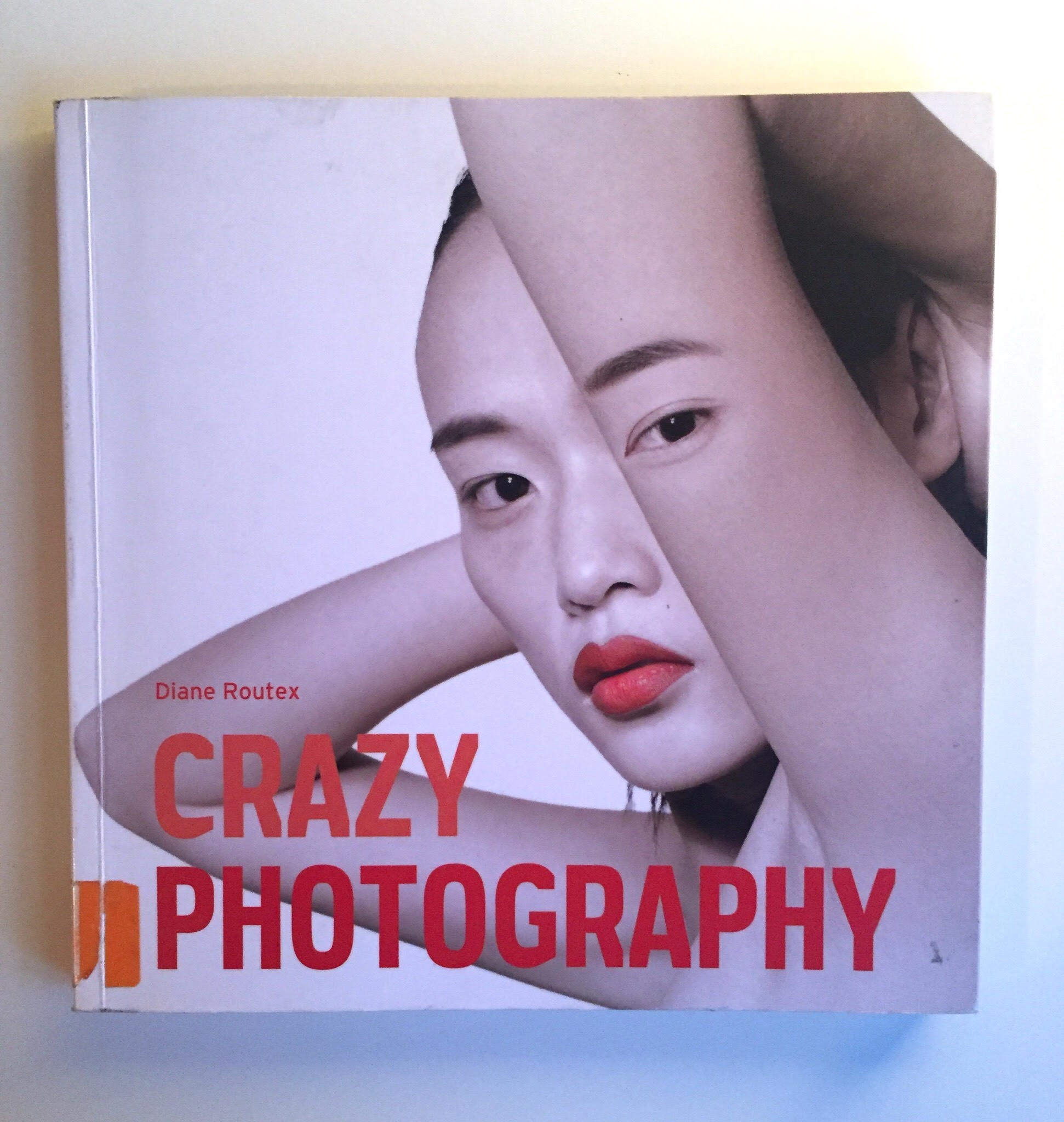
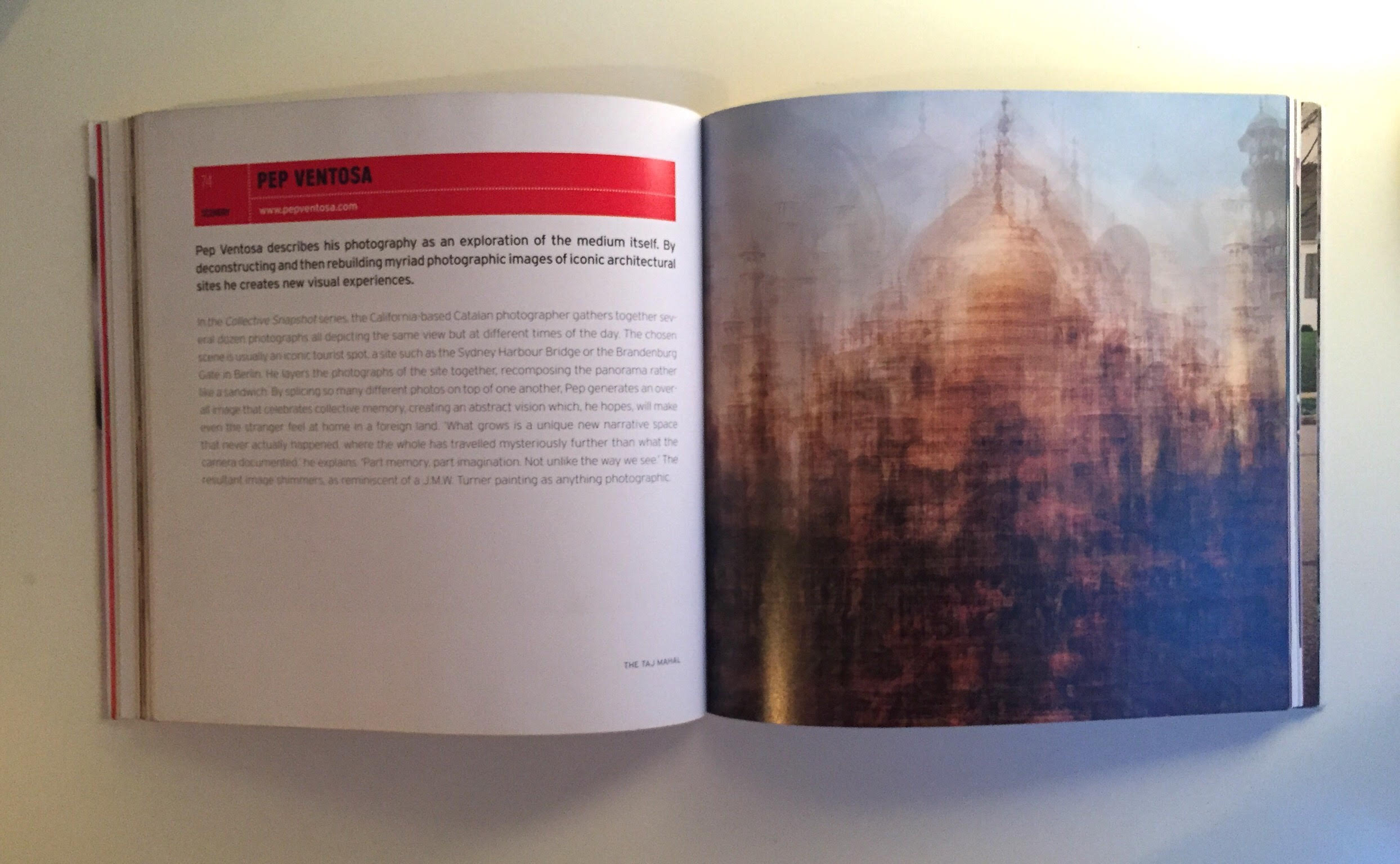
The first book I looked at was Crazy Photography, on page 74/75 Pep Ventosa uses the technique of layering multiple images over each other, each image having a low opacity. Even though this is not what I’m exactly doing, it has the same principle – multiples exposures, layering, opacity. By doing this he has created new texture, colours, shapes and a new building.
“Pep Ventosa describes his photography as an exploration of the medium itself. By deconstructing and then rebuilding myriad photographic images of iconic architectural sites he creates new visual experiences.” (Routex, 2012)
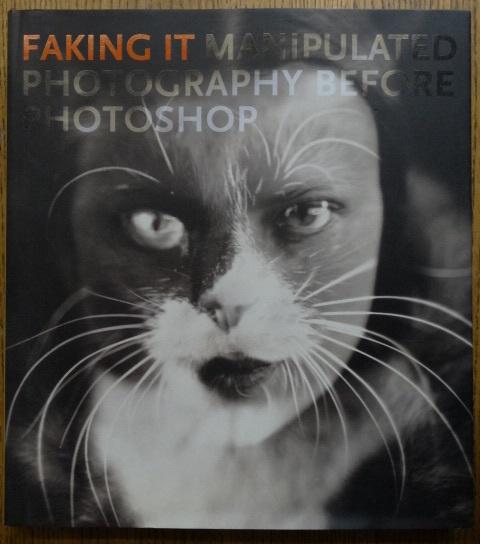
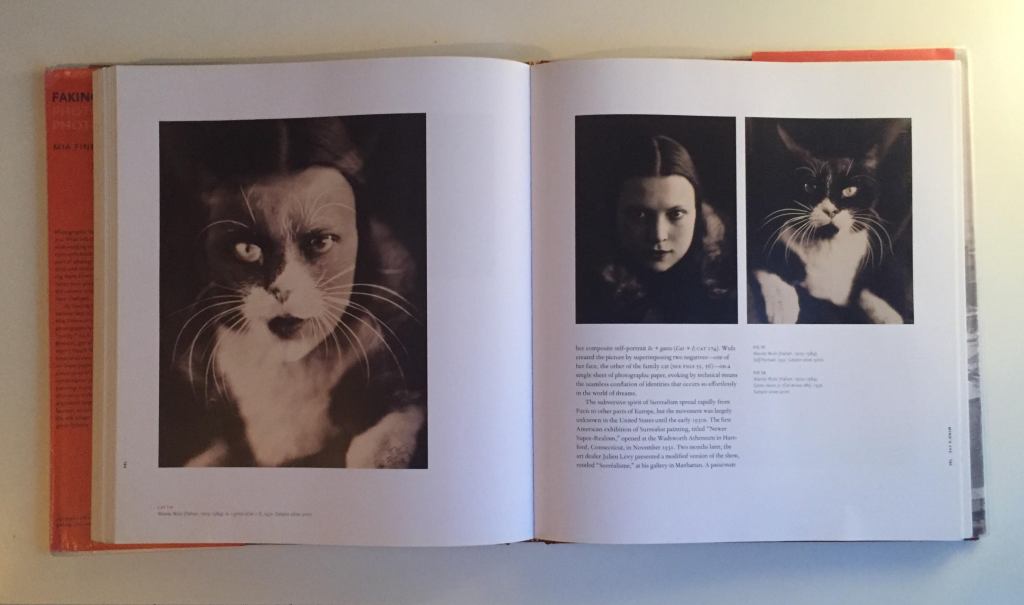
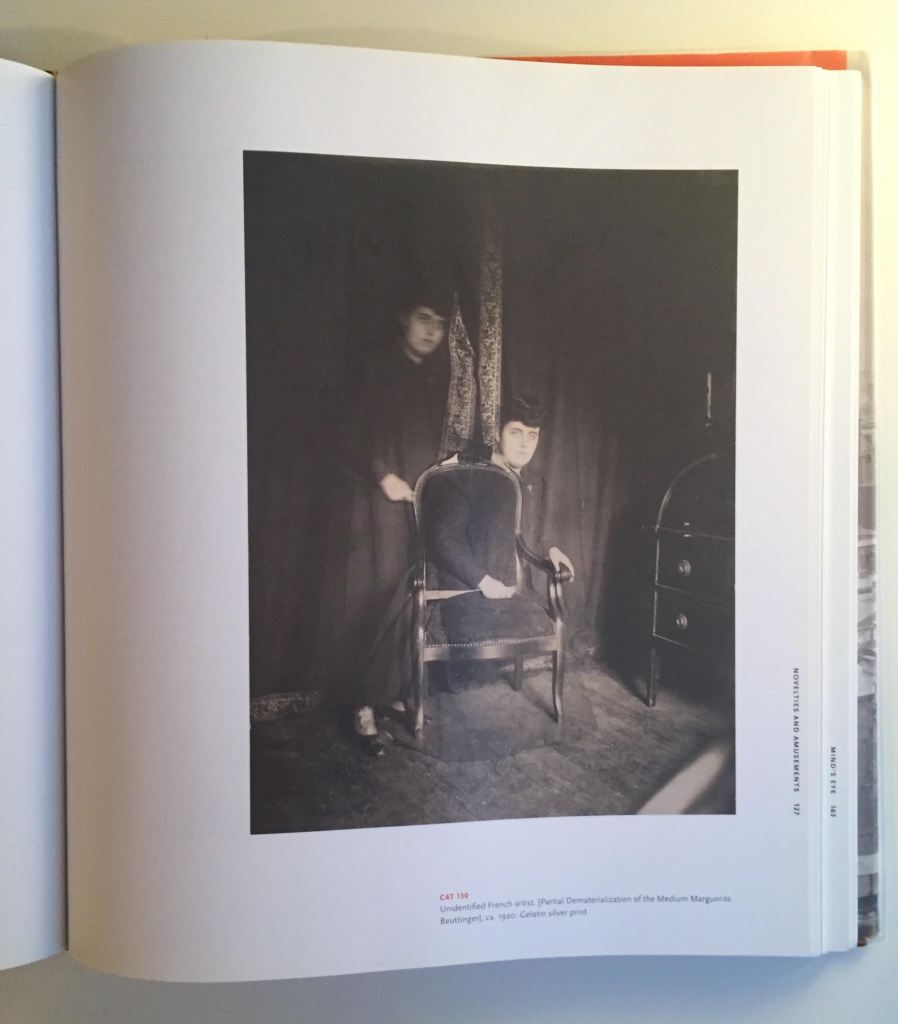
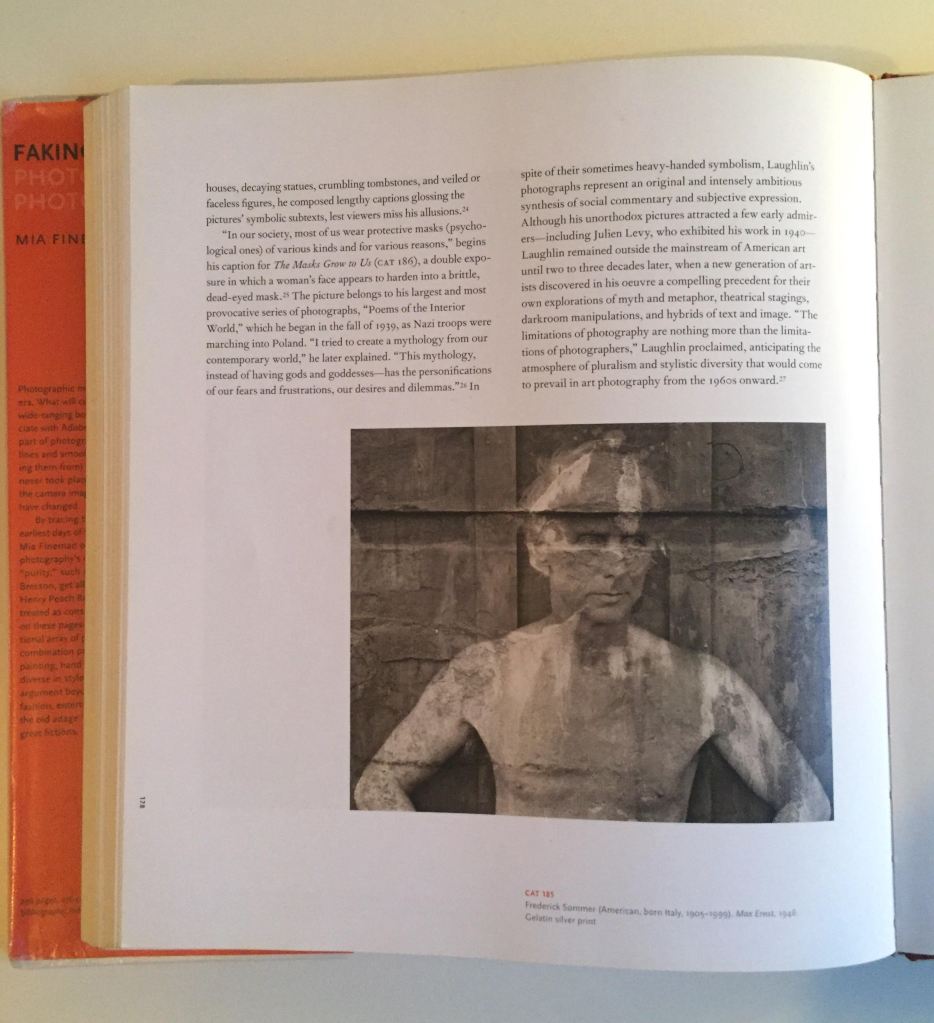
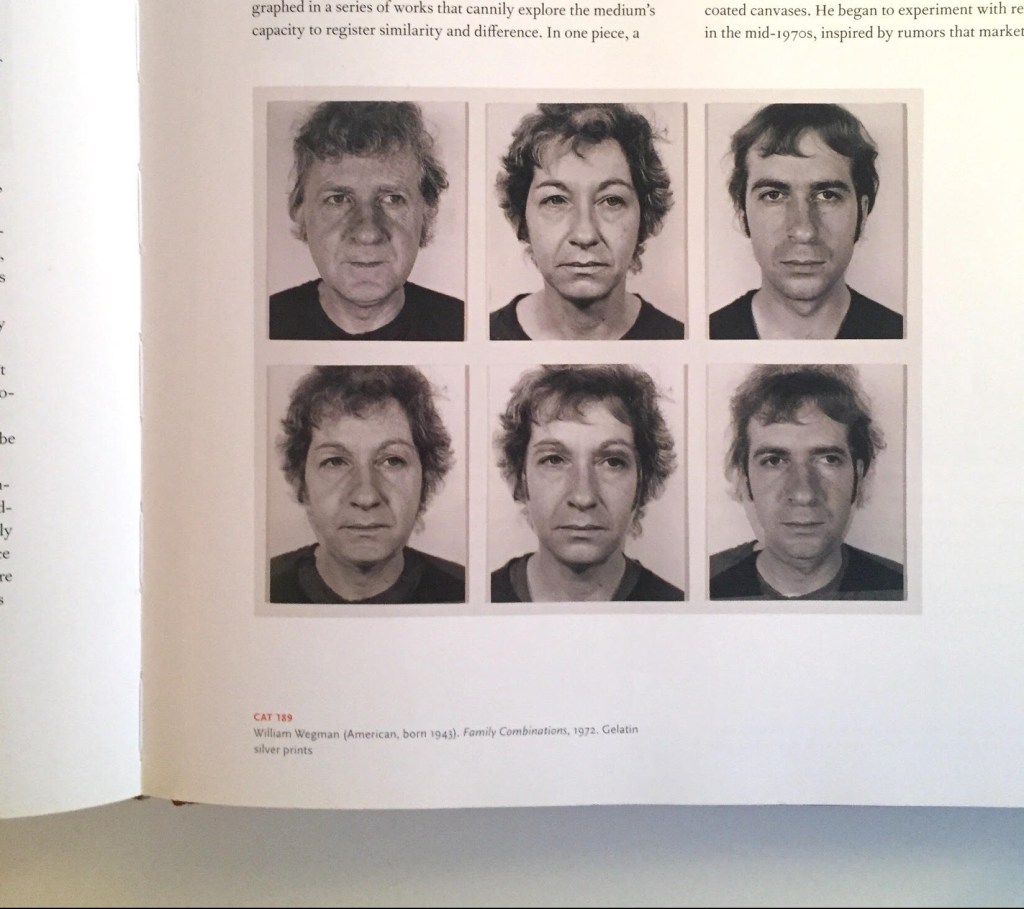
The second book I looked at was Faking It Manipulated Photography Before Photoshop. Fineman demonstrates that today’s digitally manipulated images originate from the earliest years of photography, encompassing methods as diverse as overpainting, multiple exposure, negative retouching, combination printing, and photomontage. She shows photography to be an inspired blend of fabricated truths and artful falsehoods.
It’s exciting to see different artist take and perspective with this technique. This book was fascinating to look and read. It is full of impressive work, and at the back of the book, it defines how each image was made. For me, that is useful, because sometimes you wonder how they do put the image together or what other techniques they use.
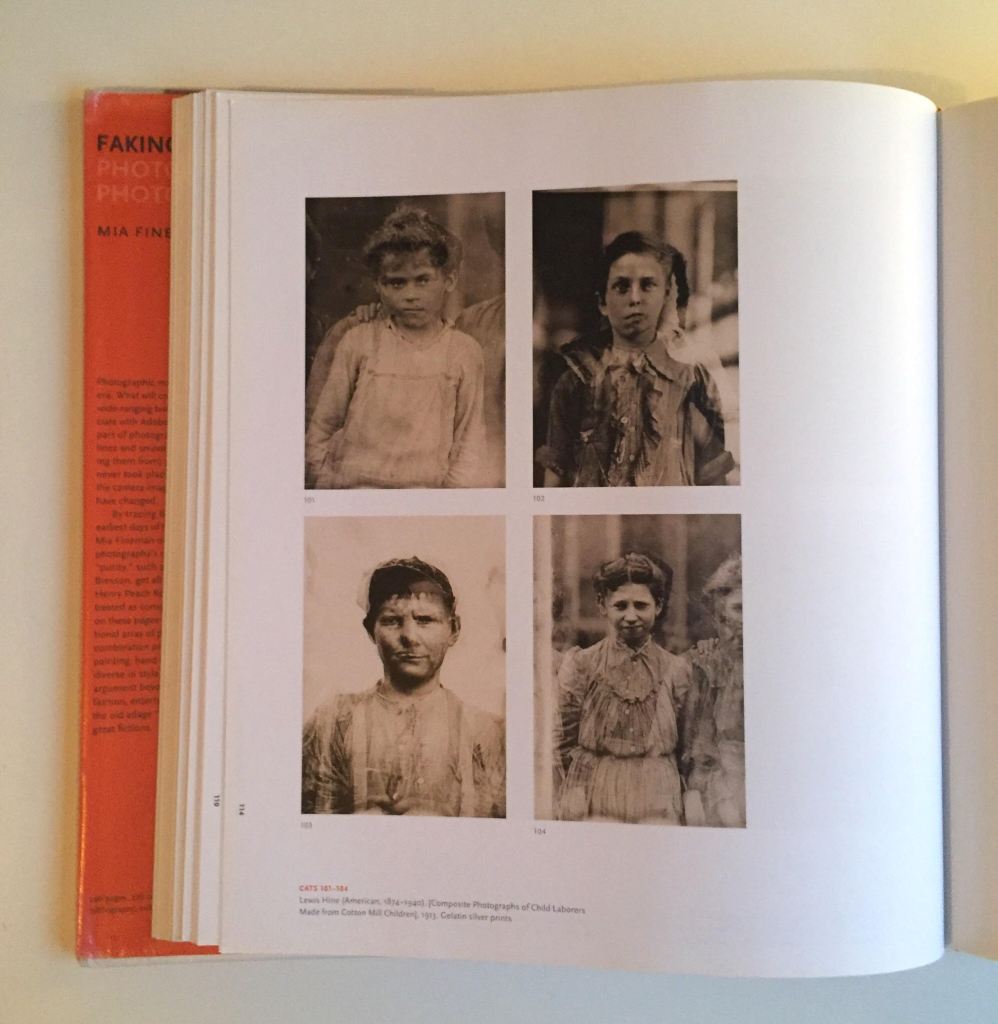
The image where there are four children is by American photographer Lewis Hine, and is a composite photographs of child labourers made from Cotton Mill Children, 1913. “From 1908 to 1918 Lewis Hine photographed working children for the National Child Labour Committee (NCLC). His heartrending photographs of tiny, malnourished human beings engulfed by enormous machines were published in newspapers and freestanding posters and influenced the passage of several laws”. “Hine created each image by rephotographing several individuals portraits of children on a single plate; the result was a series of Frankensteinesque amalgams that barely disguise the disparity of their parts… composite photographs were used mainly to generate the average or typical appearance of a social type whether healthy or degenerate. Yet Hine’s composites show little concern for physical similarities. In one image, he went so far as to combine a photograph of a young boy who worked as a doffer with one of an adolescent girl deformed”. These images became “posters for the ‘NCLC’ with titles such as ‘Making Human Junk: Shall Industry Be Allowed To Put This Cost On Society?” (Fineman, 2012)
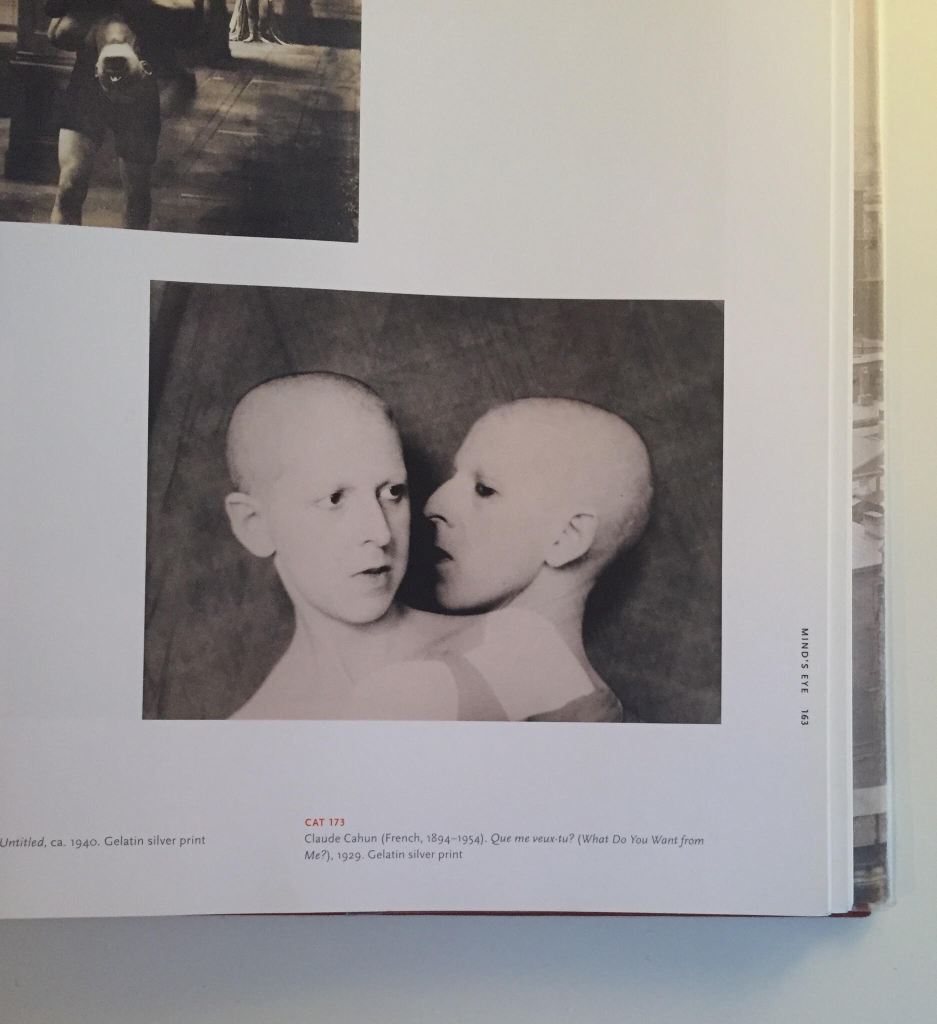
Claude Cahun is “openly grappled with her gender identity for the greater part of her life ad artistic career.” Her image above of the two baldish heads is her image called ‘What Do You Want From Me?’, 1929. Nevertheless, Cahun’s experimental photography and personal eccentricity resounded with the Surrealist taste for odd juxtapositions and unorthodox sexuality, and she remains one of the movement’s foremost figures. Doubling, especially of the eyes, lips, or head, is a recurring device in surrealist photography. Like her shaved head and unusual wardrobe, the doubled self was one of Cahun’s strategies for representing her struggle to come to terms with her own narcissism. This self-portrait exudes an almost erotic charge: the two Cahuns look in on each other like Siamese twins, or the dueling heads of a monster. The title of the work demands an elusive answer not only from the viewer but also from one Cahun to the other: ‘ What do you want from me?” (Fineman, 2012)
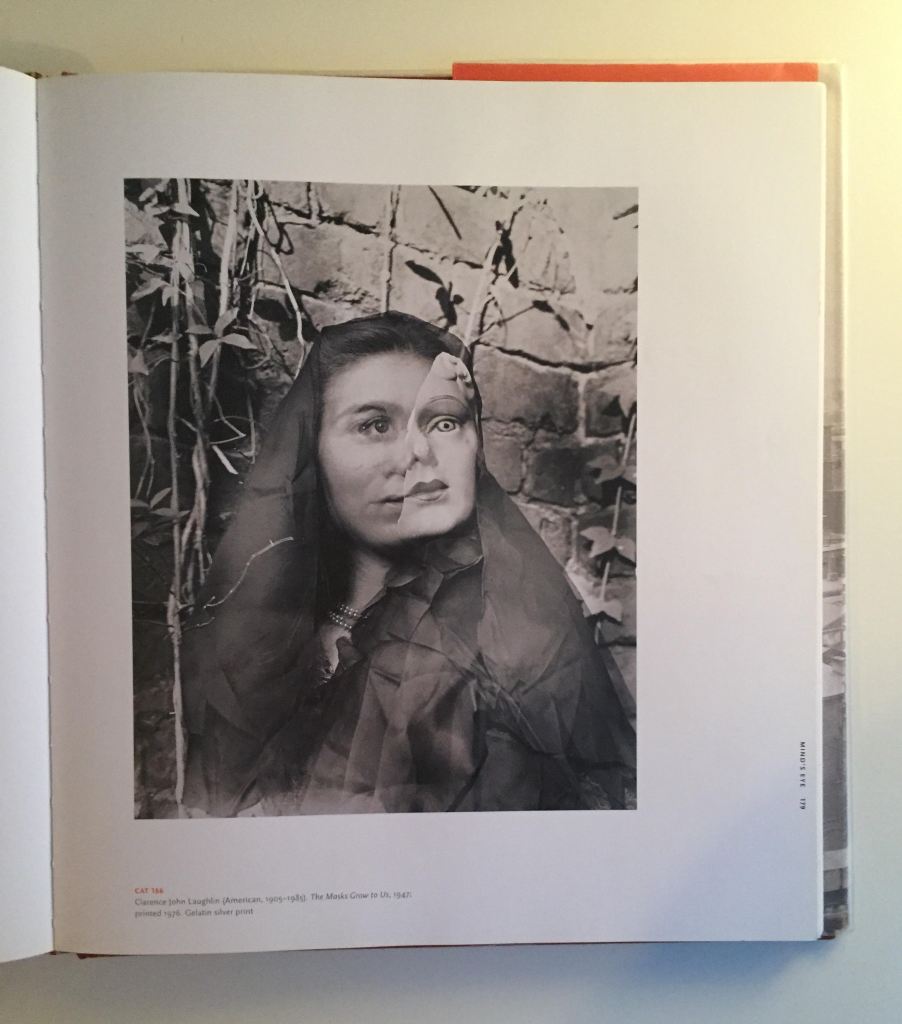
Clarence John Laughlin wanted “to be a writer himself but having failed to attract a publisher for his literary work, Laughlin turned to photography at the age of twenty-five.” The image of the women at the bottom left is Laughlin’s. “He found the technique of multiple exposure to be a fitting vehicle for his interest in signs, subtexts, and the commingling of visual and intuitive realities. In ‘The Masks Grow To Us, a young woman wearing a pearl necklace gazes upward while part of her face hardens into a glossy mask. As the exposures of the woman and the mask meld on a single negative, photographic process and allegory become one. ” (Fineman, 2012)
Laughlin wrote, “In our society, most of us wear protective masks (psychological ones) of various kinds and for various reasons. Very often the end result is that the mask grown to us, displacing our original characters with our assumed characters. This process is indicated in visual, and symbolic, terms here by several exposures on one negative – the disturbing factor being that the mask is like the girl herself, grown harder and more superficial.”
HOW DO YOU PRODUCE A MULTIPLE EXPOSURE IMAGE?
MAKE SURE YOU HAVE THE RIGHT EQUIPMENT
Not all DSLRs cameras have a multiple exposure setting; fortunately, my camera does. “Depending on what you’re trying to achieve, a tripod, a shutter release cable, a flash and plain white or black background (it could be a muslin backdrop or that empty wall in your apartment) might come in handy, too!” (CanonUSA, 2016)
KNOW YOUR CAMERA’S MULTIPLE EXPOSURE FEATURE
“While shooting double exposures is essentially just shooting two images in a single frame, different cameras handle this process differently. So, it’s important to familiarize yourself with how your camera’s multiple exposure function works. Read the manual and practice the process, if need be, before you go out and shoot.” (CanonUSA, 2016)
However, some Canon cameras allow you to take two or more exposures in one image, offering users more flexibility.
UNDERSTANDING AND SHOOTING DOUBLE EXPOSURES
“Now, before you start shooting, it’s important to understand how double exposures actually work. In the days of film, taking multiple shots in a single image usually involved snapping one frame, rolling back the film and taking another snapshot to overlay the original. In today’s digital age, we’re still overlapping images, but instead of re-exposing film, it’s simply a matter of blending data and pixels.
Technically, shooting double exposures with your digital camera is easy. Simply set your camera to Multiple Exposure mode, shoot your first layer (or select one from your camera’s memory card, if permitted), then shoot your second layer, and you’ve got your double exposure. The hardest part comes when you’re choosing, framing and positioning your two shots so that they blend well together into one image.
The first exposure or layer of your image serves as the base layer upon which elements of the second frame will blend into. The second layer is just as important as your base, and, in many ways, it can be the hardest layer to shoot. Sure, you can just randomly pick a subject, point and shoot, and hope for the best. But picking a great subject or scene, and working with your camera’s angles so that it fits perfectly and complements (or provides a striking contrast to) the base layer will yield much better results.” (CanonUSA, 2016)
DARK VS BRIGHT
“Darker subjects or scenes will blend more easily, while brighter or lighter subjects may blow out some details in your double exposure.
This is why silhouettes are fantastic for double exposures, as are busy urban scenes or colorful graffiti and street art. A sunny sky or an overly bright landscape as your base photo, on the other hand, might produce a washed out image. In fact, many photographers prefer to shoot darker scenes first and lighter scenes second.” (CanonUSA, 2016)
CHOOSE YOUR BASE EXPOSURE CAREFULLY
“As previously mentioned, many photographers (film or digital) who have mastered the art of double exposure tend to use a darker subject or scene as their base or first exposure. But this not a rule of thumb. In fact, your base exposure really depends on the image you are trying to create.
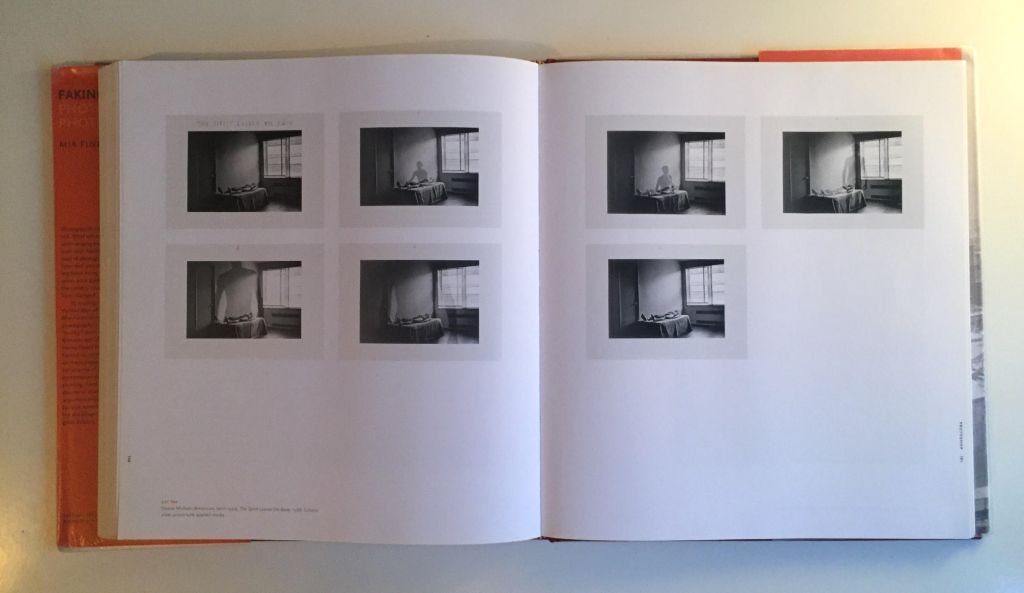
For double exposures that show movement or ghostly apparitions, you’re more likely to use the same scene for the both layers. The only difference is, when shooting the second layer, you’ll have your subject move out the frame or to a different position to get that translucent, ghost-like appearance. (A tripod is recommended for this type of photo).” (CanonUSA, 2016)
VIDEOS THAT WERE USEFUL
The video explains how particular environments can affect the overall image dramatically. And also what the different settings within the camera can change the look for what you are after. Even though most of the images produced in this video aren’t the concept I was going for, it was useful to learn the techniques and understand the different setting, so I am prepared for the upcoming shoots.
Fineman, M. (2012). Faking It Manipulation Photography Before Photoshop. New York: Metropolitan Museum of Art, pp.23, 114, 127, 163, 164, 165, 178, 179, 185, 190, 191, 233, 247, 251.
Marien, M. (2012). 100 ideas that changed photography. London: Laurence King, pp.134, 135.
Routex, D. (2012). Crazy Photography. [Erscheinungsort nicht ermittelbar]: Vivays Publ., p.74.
“A point of view shot is a film angle that shows what a character is looking at in the first person. It is usually established by being positioned between a shot of a character looking at something, and a shot showing the character’s reaction.” (StudioBinder, 2019.)
KEYWORDS AND POINTS
As this project is about what I see, I wanted to produce that as much as I can, to make the audience feel like their me. This way 1st point of view cinema is the best way to interpret/research this idea for me.
EXAMPLES OF 1ST POINT OF VIEW IN CINEMA
There are many films where they either used this POV for the entire movie, or little snippets of the film. Either way, this is very effective and make the audience feel like they are that person. Below are some examples of films that used this POV –
Hardcore Henryis a tremendous first-person point of view, film example. The film took audiences into the actual centre of an action movie.
“This action film took the entire idea of ‘First Person’ to the next level. It definitely took the POV Shot to the next level and exploited the frame as an interesting gimmick to build hype around the title.” (StudioBinder, 2019.)
Tom Hooper puts us right into the action in The King’s Speech. “He uses the POV to accentuate the actual fear of public speaking and give us a glimpse into what the world looks like from the eyes of the aristocracy.” (StudioBinder, 2019.) I would hate to be in that position, the number of eyes staring at you, make me nervous even looking at the snippet of the film.
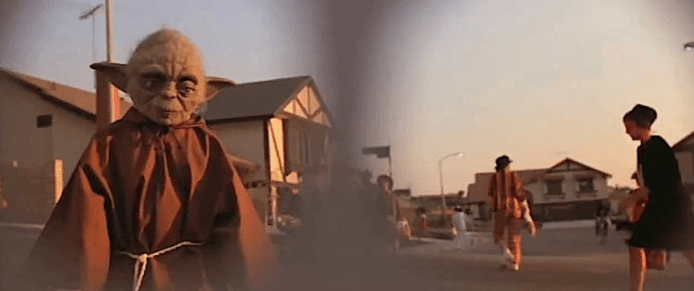
In E.T., Spielberg has shot but with a much more congenial spin on the POV. As everyone has gone tricking or treating with a mask before it makes it relatable and exciting to watch.
“While POV Shots certainly existed since the dawn of cinema, the rise of digital filmmaking allowed directors and writers the opportunities to brainstorm new uses for point of view shots. It started small, with the breakout hit, The Blair Witch Project.” (StudioBinder, 2019.)
Using this POV in a film like this makes the suspends and scariness even more heightened. This is definitely a great idea, it really makes you feel that person in the woods.
Similar to Spielberg E.T., John Carpenter uses the point of view shot to put us in the Killer’s mindset for Halloween.
There is many more 1st POV scene within films, but from what I gather is that the idea is to make the audience feel that they are the person in the movie, and to feel what their perspective is like. I could do this by a different type of equipment I used, (24mm lens), to the position or angles of taking the images. Through this research, it has given me a lot of different ideas and concepts I could do for shoots.
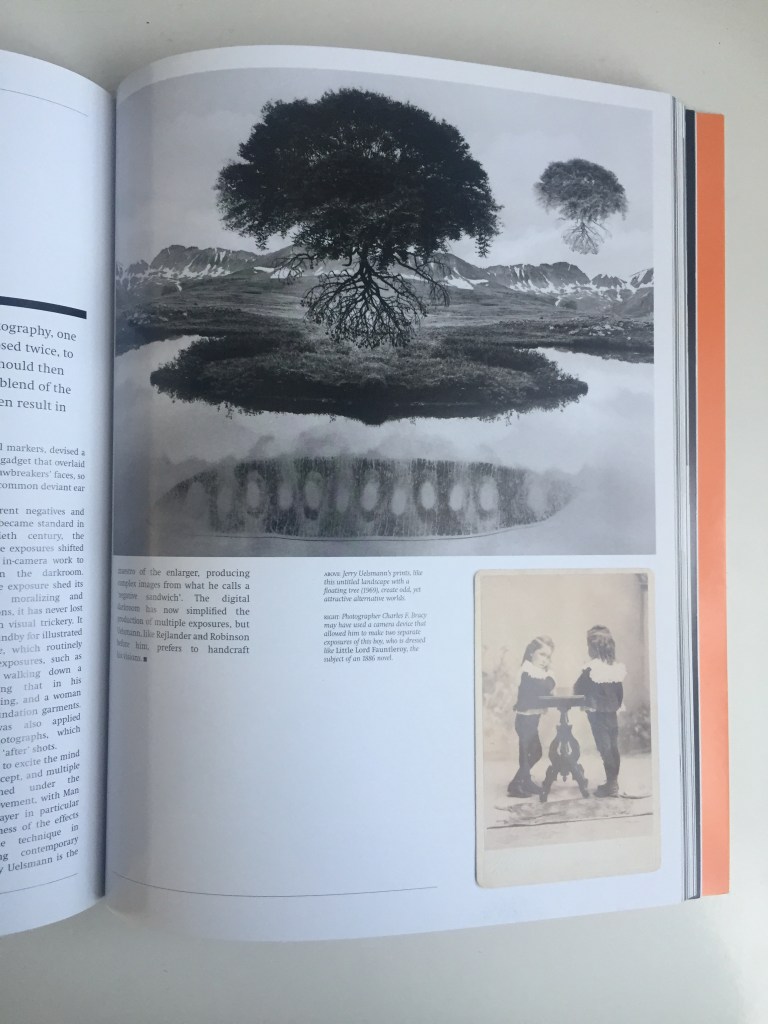
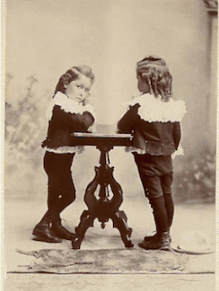
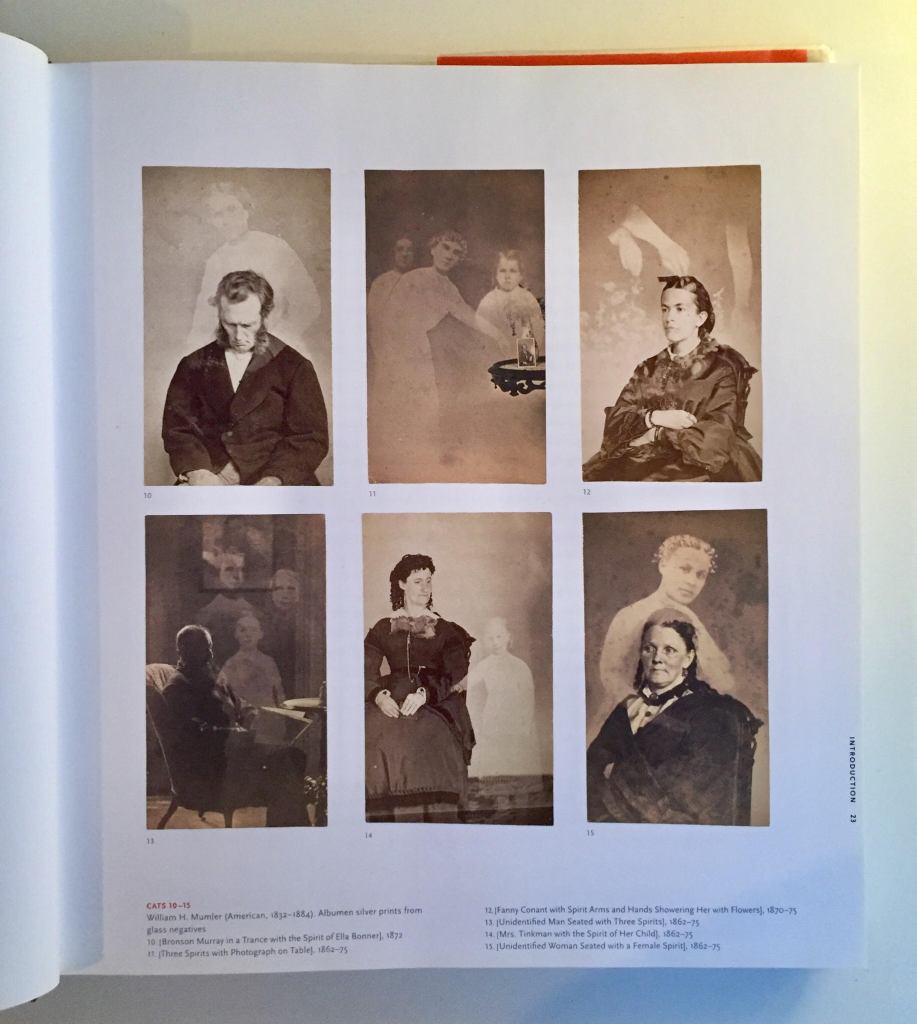
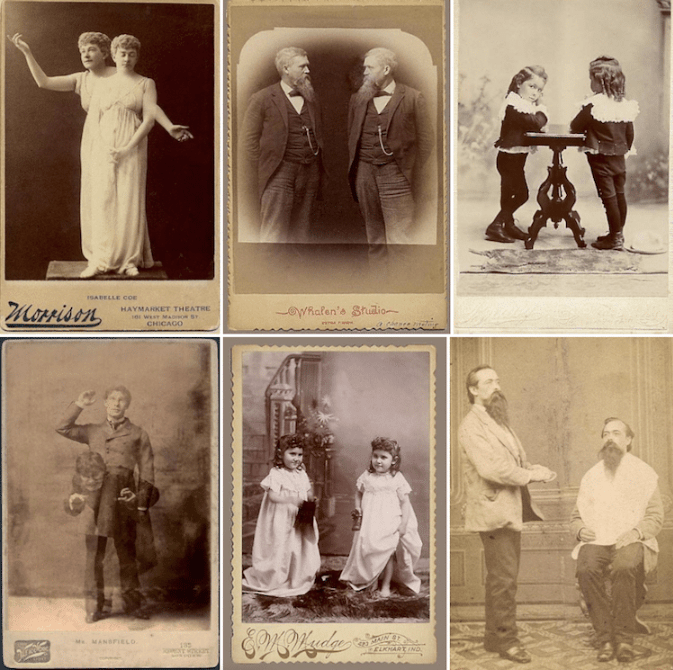
Today double exposure has become very popular, in many medians, and some people think this technique is relatively new. However, double exposure has been used since the 1860s, the image below shows some examples. In the 1860s this was a significant business boost, “they discovered how to make a portrait subject appear twice in a frame as if they had an identical twin. In each of the pictures, the person was striking a different pose.” (Barnes, 2017)
“To capture these now-vintage images, photographers would snap a picture of the subject in one position. Then, they’d have to move into another pose before the following photo was shot. Rotating lens caps and special plates (the precursor to film) were also part of the process. The result was a playful and surreal approach to early photographs.” (Barnes, 2017)
As technology improved, we can now create this effect within our own digital camera.
It’s interesting also to see how the dynamic has changed on how the photographer and model wants the image represents. Back then, the photos were to make these people look noble, powerful, and have elegances. However, today, it could be used to manipulated, distorted the viewers perspective.
John Deakin was a British photographer. He is known for his portrait; however, he has produced some fantastic images with this technique.
The video below “explores John Deakin’s artistic development from the 1930s into the war years, contextualising his work within a broader framework of 20th century Modernism. Presenting new research from the Tate Gallery Archives that connects Deakin to British photographer Barbara Ker-Seymer, it includes the discovery of an early double exposure that could have been taken by either photographer. Paul Rousseau and James Boaden take account of the surrealist elements of the double exposures, exploring connections to Francis Bacon’s Man in Blue series; and Jonathan Law presents Deakin’s double exposure portraits alongside a rich seam of others by artists including Degas, Duchamp and Picasso, positioning the time-based multiple planes within these photographs alongside the generation of cubism.” (Paul Mellon Centre, 2016)
(Paul Mellon Centre, 2016)
This video is interesting as it includes mostly the works of John Deakin, however, mention other artists that have used the technique of multiple exposures. It’s fascinating to see other artist take on this technique.
In the video, it mention that to produce the images above, Deakin would have had to really think about the positioning, lighting and allowing the exposure to be a balance. Even of the multiple exposure effect, the images themselves are really lovely and natural-looking. If I did this in the same style of Deakin, I would think and plan about the key things above. From observing the images, it looks like they were all photograph by the window, which produced the beautiful soft lighting.
While Deakin was photographing Pablo Picasso, Picasso generated his own double exposure, which later he used them as the bases of his work. Within the video one of the men says “different angle but all on the same viewpoint” (Paul Mellon Centre, 2016), which if you look at the images they really do, they’re all different but somehow connect together. Later he says “the double exposure allows you to bring back that element of time, and to represent things from different angles. And to represent different states within a single image.” (Paul Mellon Centre, 2016)
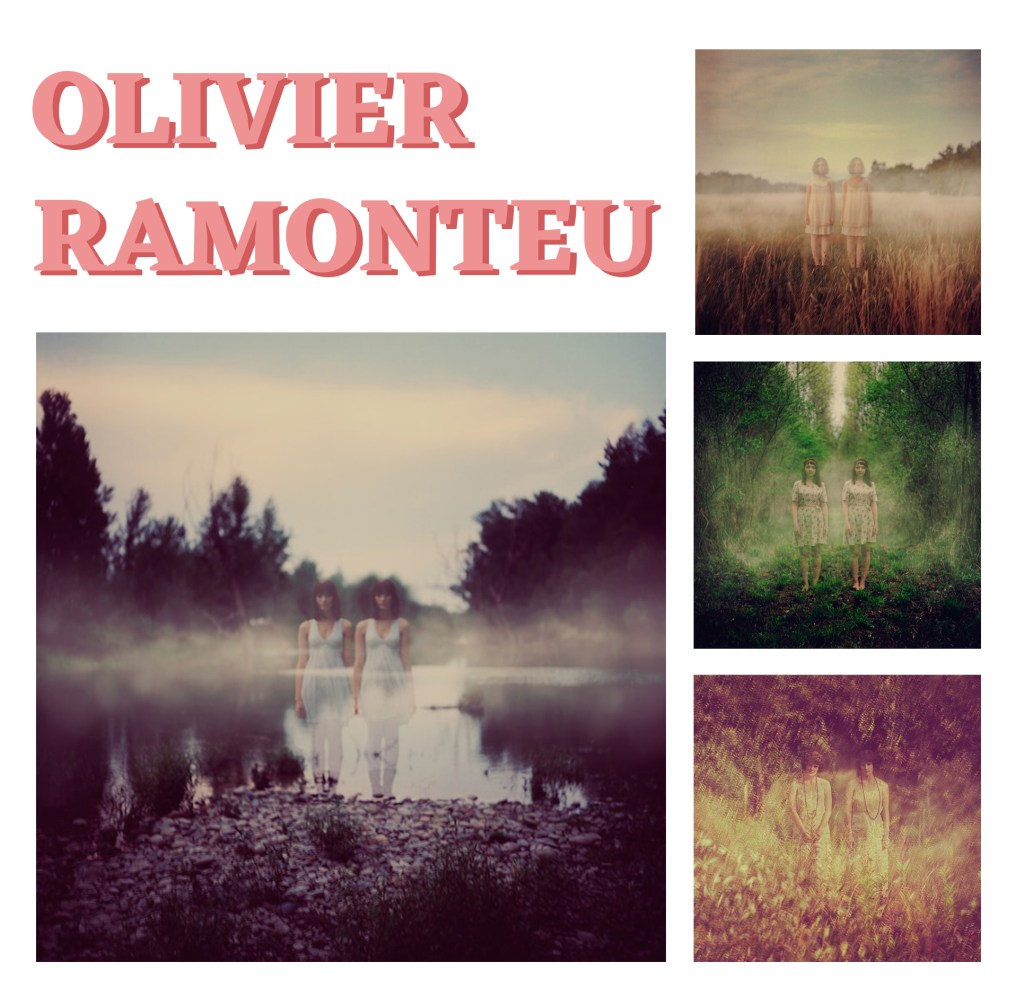
Olivier Ramonteu, a french photographer, uses both analogue and digital camera methods in his work. The images above are from his series ‘Alter Ego’, which features ghostly images of twins—or so we think. “Some are identical twins, while others are the same person shot in multiple exposures.” (Barnes, 2017)
“The main idea of the project was to make people doubt what they see,” Ramonteu said. “I clearly decided to not reveal if the people you see are twins. I can only say that for this project, I did a lot of experimentations with and without twins.” (Rosenberg, 2014)
“I tried to create beautiful and disturbing scenes,” Ramonteu noted as a consistent theme with his other work. “I love to introduce a part of strangeness in my scenes, something that is not really obvious but definitely present. That is why the people I represent here seem at once so fascinating and so disturbing.” (Rosenberg, 2014)
This is sort of what I see; however, Ramonteu has manipulated the viewer’s eye in thinking is this real or not, yet making it beautiful. The way how he has placed the model within a location that is empty but somehow fits with the concept. For my project, if I photograph people, I would have to think of an area that makes sense for me, the concept of the project, and what will please the viewer’s eyes.
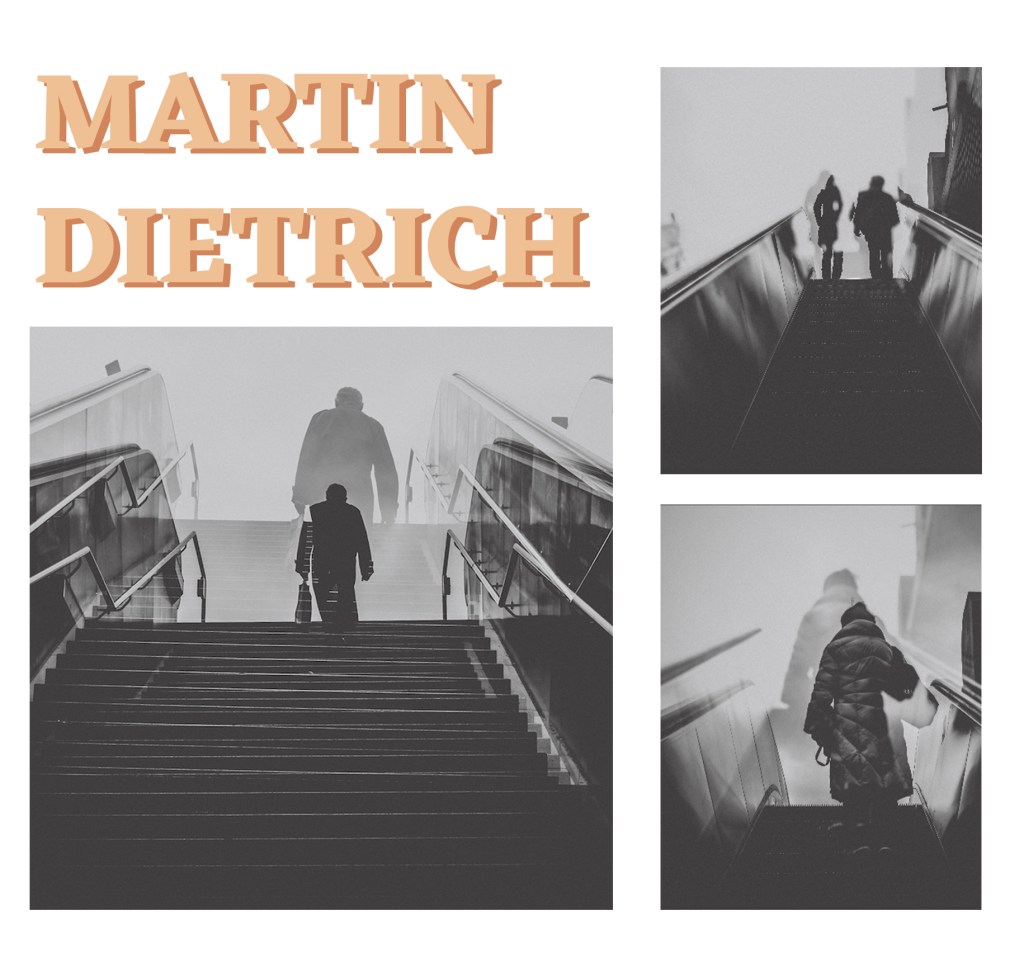
Martin Dietrich is a photographer from Germany, and his “work is mostly of a certain abstract, minimalistic and geometrical nature, including strong leading lines and shapes. To a large part, my work incorporates urban themes such as architecture and street photography. Nevertheless, you’ll also find some other things I feel like at the moment.” (Martin Dietrich Photography, n.d.).
The images above are from ‘The ghosts that carried us away’ series. The link is below for the full series. Dietrich made this series in January 2014, done in-camera with Fujifilm X – Pro 1.
His approach to a ‘street style’ multiple exposures is visually exciting. From the viewpoint he took this at, the position of the second exposure, having the series in black/white, to the leading line help create a mysterious but fascinating series. As you cannot see the people faces in the images, it makes you feel like it could be anyone, or you could be a part of it. Also, the use of the stairs/escalator going upwards makes you think where are they going. Almost heaven-like due to the white canvas background at the top.
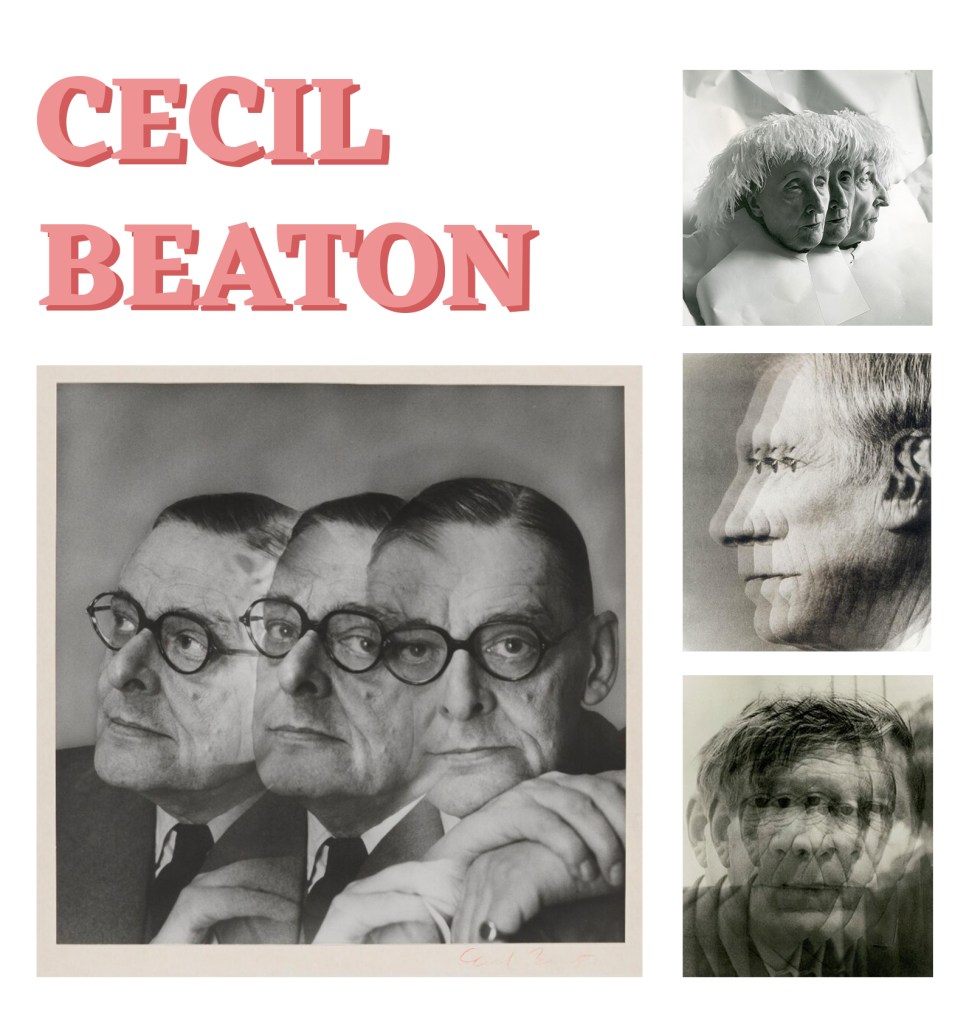
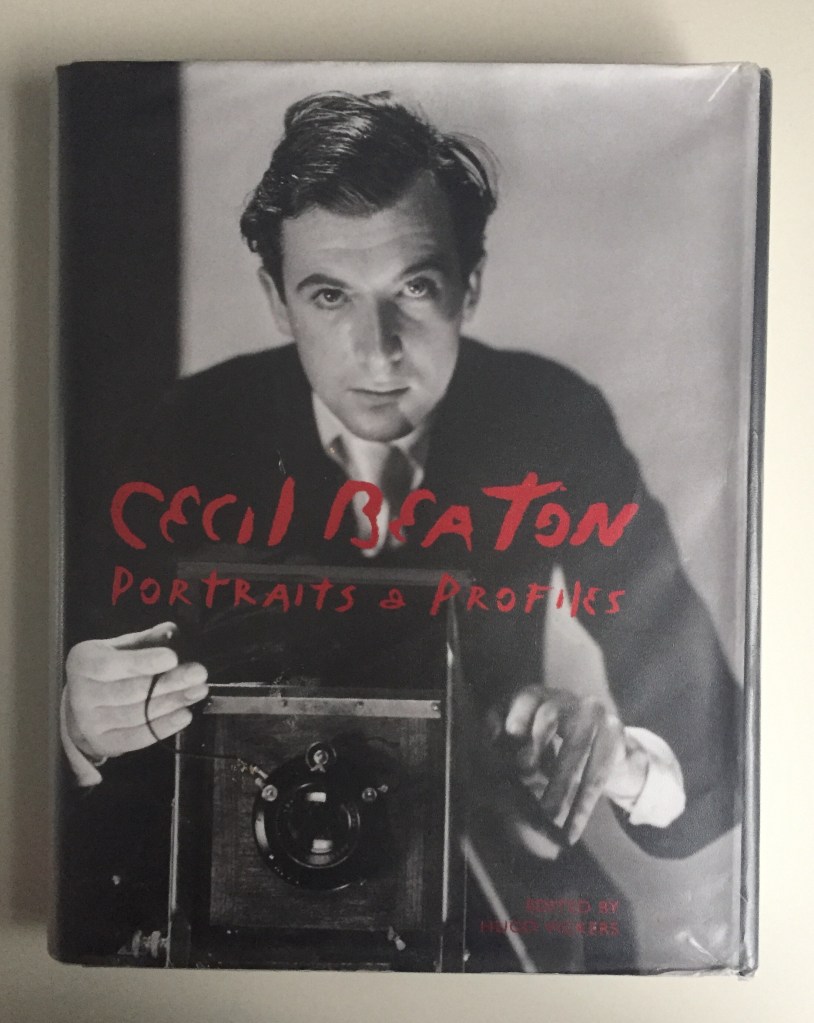
“Cecil Beaton was a British photographer and designer best known for his elegant photographs of high society. Working within a cinematic approach, his black-and-white images are characterised by their staged poses and imaginative sets.” (Artnet.com, n.d.)
“Be daring, be different, be impractical,” he once declared. “Be anything that will assert integrity of purpose and imaginative vision against the play-it-safers, the creatures of the commonplace, the slaves of the ordinary.” (Artnet.com, n.d.)
Beaton work above has a similar approach as John Deakin, I find Beatons work more artistic and surreal. While researching Beaton and finding images that were related to my project, I came upon the book below.
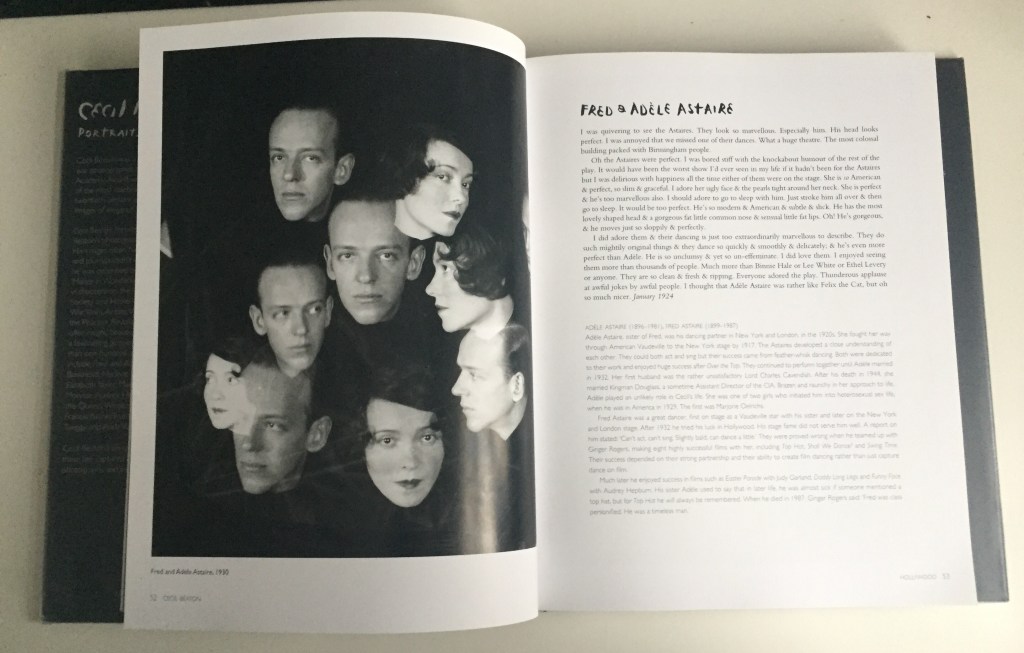
FRED & ADELE ASTAIRE 1930 (Beaton and Vickers, 2014)
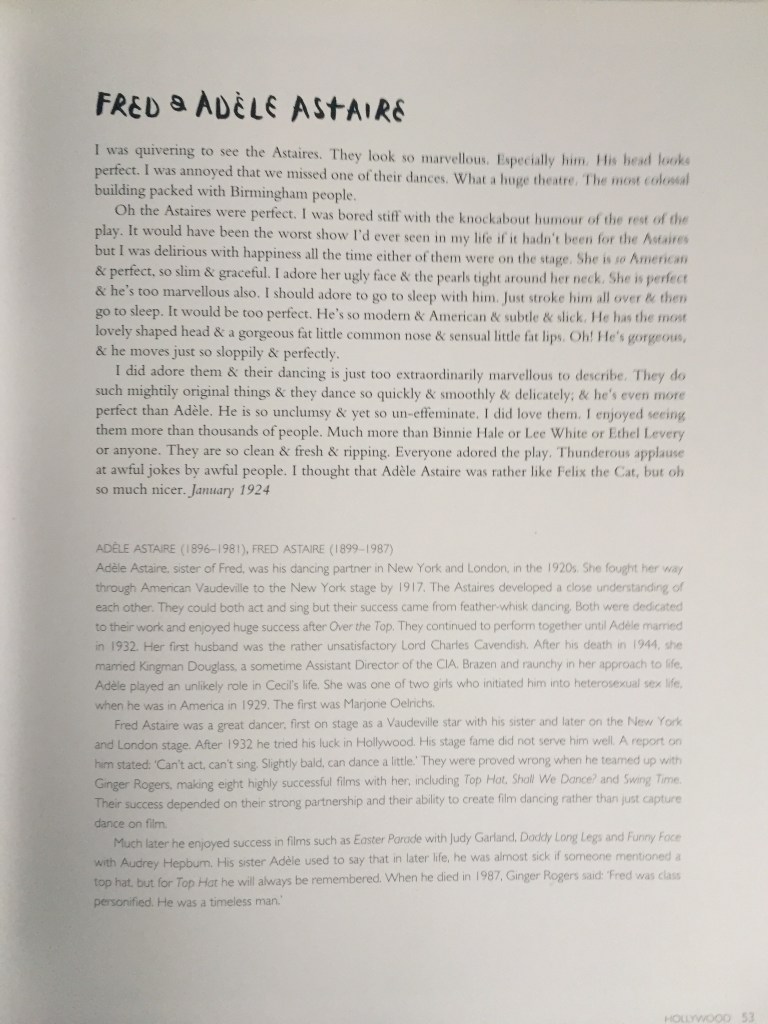
The image ‘Fred & Adele Astaire, 1930’ is another image of Beaton multiple exposure work. In the text, Beaton always mentions how “They look so marvellous”, how “His head looks perfect” and how Adele was “so slim & graceful”, so perhaps that why he produced a multiply exposure image, so you can see how ‘perfect’ they are from all angles. Because Beaton has used the word ‘perfect’ seven times throughout the paragraph, and other terms as well. Maybe that why Beaton mainly photographed celebrities because of their looks and status. Or how he was interested in their own identity.
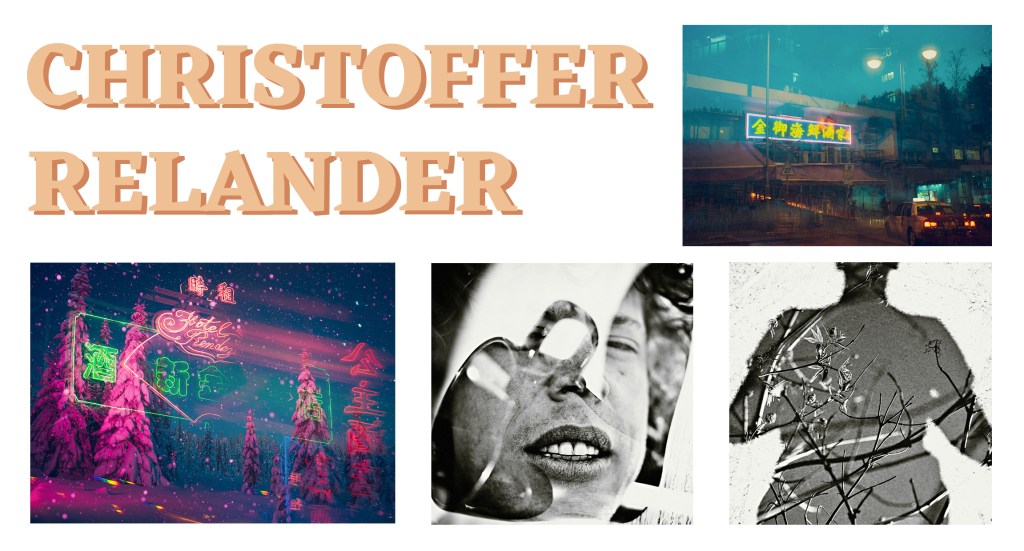
“Christoffer Relander was born in Finland December 1986 and grew up in the countryside of Ekenäs. Relander’s interest in art started at an early age, but it was not until he served the Finnish Marines between 2008-2009 that he found his passion with photography.” (Christoffer Relander, n.d.)
Even though his photography is not the style I want to take mine, it is really fascinating. When you type multiple/double exposures into the internet, you always get the stereotypical photography artwork. However, Relander has used this technique and interpreted it into his own style and made something that I’ve never seen before. This quote by Relander is compelling and what I want to capture and try to achieve in this project.
“Reality can be beautiful, but the surreal often absorbs me. Photography to me is a way to express and stimulate my imagination. Nature is simply the world. With alternative and experimental camera techniques I am able to create artworks that otherwise only would be possible through painting or digital manipulation in an external software.” – Christoffer Relander
The neon colour images above are really trendy, modern and exciting. Using a juxtaposition, by overlaying two completely different areas, one being rural and untouched, and the other being urban and man-made is impressive. Also, the colours produced from the neon signs is a great idea, you can tell that Relander really thought about the locations and angles.
REFERENCES
Barnes, S. (2017). How Double Exposure Photographers Fuse Two Separate Worlds into One Dreamlike Scene. [online] My Modern Met. Available at: https://mymodernmet.com/double-exposure-photography/ [Accessed 19 Dec. 2019].
For this unit ‘identity’, I found it is vast. In where it could be about myself, others around me or strangers etc. I explored the broadness through the first initial mind map and mood board.
I did have other initial ideas, such as exploring environmental portraits of strangers, or my close family/friends. Looking into their jobs, as a sense of their uniform, being, all the same, looking like the same identity. But I feel that the idea below is unique and different that I can only produce.
IDEA – DOUBLE VISION
This idea was generated by talking to a visiting lecturer ‘Claudia Leisinger’. I told Claudia some of my thoughts, and in result, one of my peers happen to mention by accident, about my eyes. Then Claudia asked me to elaborate, and I told her I have Duane syndrome –
“Duane syndrome (DS) is an eye movement disorder present at birth (congenital) characterised by horizontal eye movement limitation [a limited ability to move the eye inward toward the nose (adduction), outward toward the ear (abduction), or in both directions].” (NORD (National Organization for Rare Disorders), n.d.)
However, I have a rarer condition in where I have 90% double vision, when not looking straight forward all I see is double of an object/surroundings. A specialist has told me, to put it, with DS typically your eyes will produce two different images, and your brain with make it one. However, my brain doesn’t merge the two images into one; rather, it puts them together like an overlap of two images (double vision). I was born with DS, but I started to notice the double vision significantly for over a decade now. It does affect my day to day life, but I have adapted to change certain aspects to suit me as it causes me migraines, a strain of the eyes and dizziness. But eye specialist says I have 20/20 vision, and yet, I’m still studying photography!
However using my weakness to my advantage, would be an exciting way to show my unique visual perspective through photography. And Claudia thought this would be interesting and unique to do.
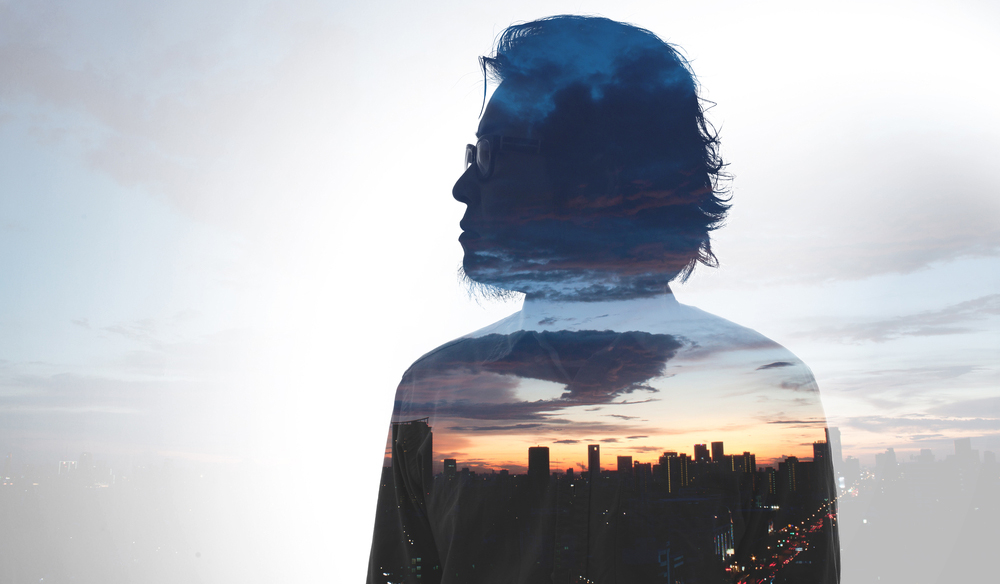
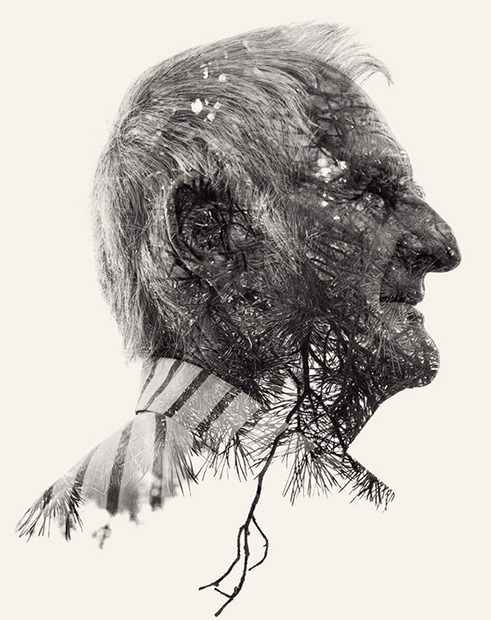
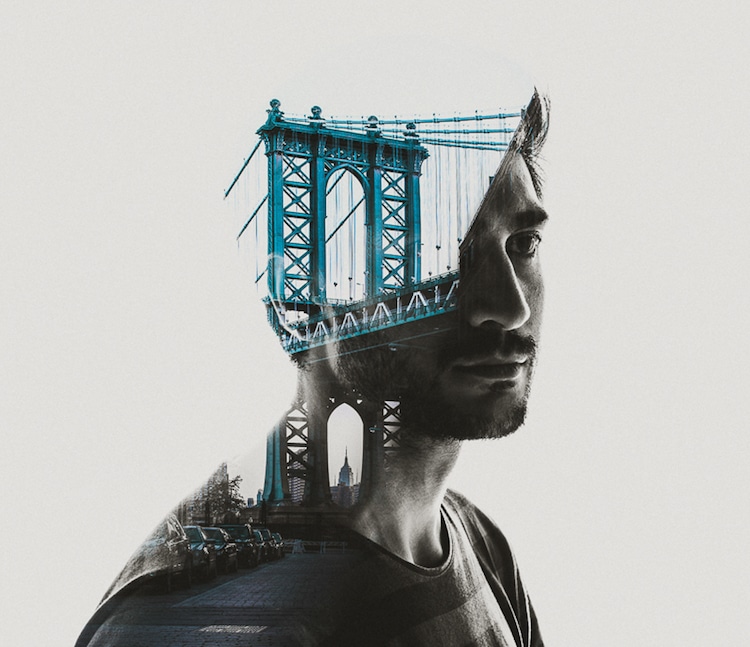
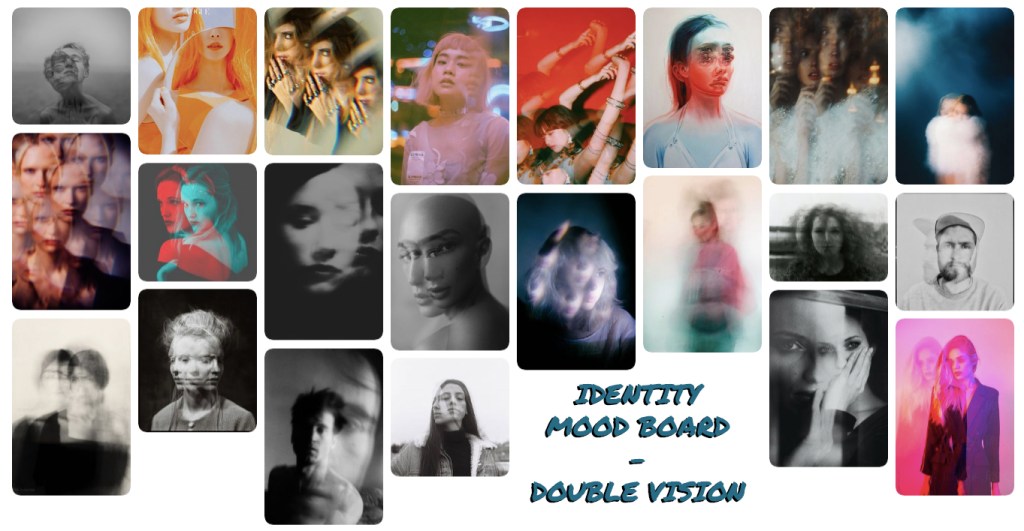
So my idea was to take images in double/multiply exposure, as shown in the mood board above, in-camera or through Photoshop.
But the question is what am I photographing. Is it my own environment, family member or friends. Even photographing them outside or within my home. But maybe past events that have happened due to my double vision. Recreating them for my final images, showing my 1st point of view perspective. I will do test shoots & research, learning how to do the technique of multiple exposures.
BIBLIOGRAPHY
NORD (National Organization for Rare Disorders). (n.d.). Duane syndrome – NORD (National Organization for Rare Disorders). [online] Available at: https://rarediseases.org/rare-diseases/duane-syndrome/ [Accessed 26 Nov. 2019].
Identity to me can tell me many things about someone, if that’s myself to family/friends, to strangers. But what makes up a personal identity? Is it their possessions, or their personality. I think people first see peoples identity through what they are wearing, race, gender, age, class etc. But after talking to people, you would start to understand the person better.
But not all the time, you can define a person’s identity through their clothing, because they may be wearing uniforms from there jobs, where people will stereotype certain people. Them being in this uniform may not show their true identity or the way they express themselves through clothing, down to job rules.
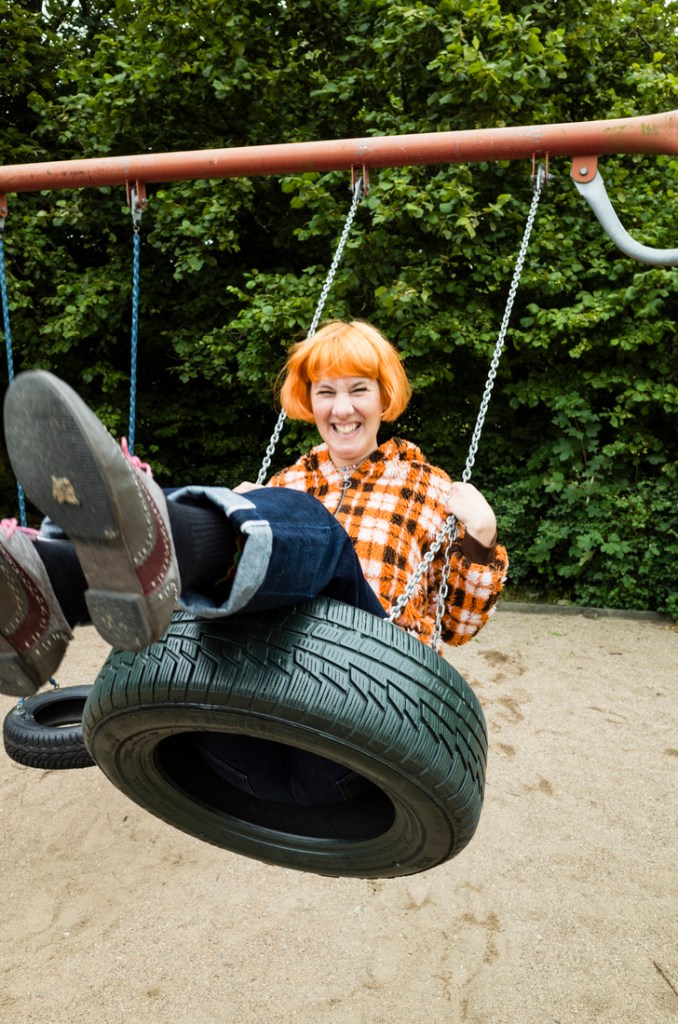
This unit is fascinating because it’s so broad, I could do a lot of different ideas. Below I have created a first initial keywords & mood board of the theme identity.



 SARAHLOCKYERUCA